

Cities and public spaces
Sentra gives a city one console for its streets, junctions, squares, parks and public car parks, on the cameras and recorders it already owns. The local police dispatch sees the map of the town with every camera, the counts at the junctions, the free spaces in the car parks, the vehicle of interest at the moment its plate is read and the park after closing. Footage stays on a server the city owns or in an isolated tenant hosted by Sentra in Romania, and every view is written to the audit trail.
Vehicles counted from each arm to each arm, by class, with a spreadsheet export.
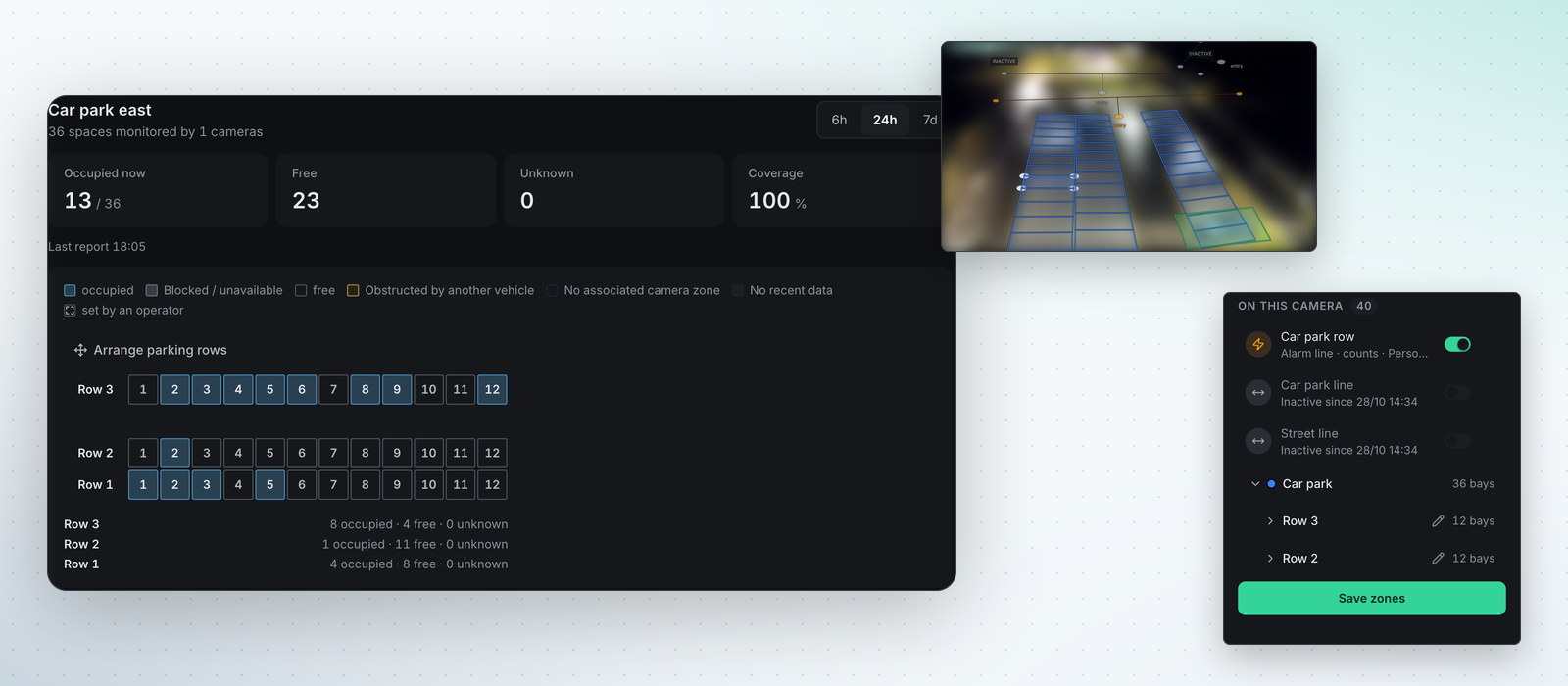
Occupied and free spaces from bays drawn on the camera picture.
A plate of interest raises an alert when it is read.
Where people walk and where they stop, over a day, a week or a month.
A day at the city dispatch
The same cameras, sensors and rules from the first shift to the night. All use cases
- 07:30Junction
The morning peak is counted at the junctions of the ring road, per approach and per turn, for the traffic study.
Parking and Junctions - 10:15Car park
The board shows the free spaces per row in the public car parks, and the barrier at the central car park opens for the residents on the list.
Parking and Junctions - 13:00Square
The heatmap of the market shows where the crowd stands and which passage the stalls block.
Heatmaps - 17:45Street
A plate on the watchlist is read on a street camera. The dispatcher gets the alert with the picture and follows the vehicle across the town on the map.
Access Control - 20:00Dispatch
The shift changes. The handover report lists what happened, what is still open and which cameras went down, with a note for the night shift.
Assistant and Shift Handover
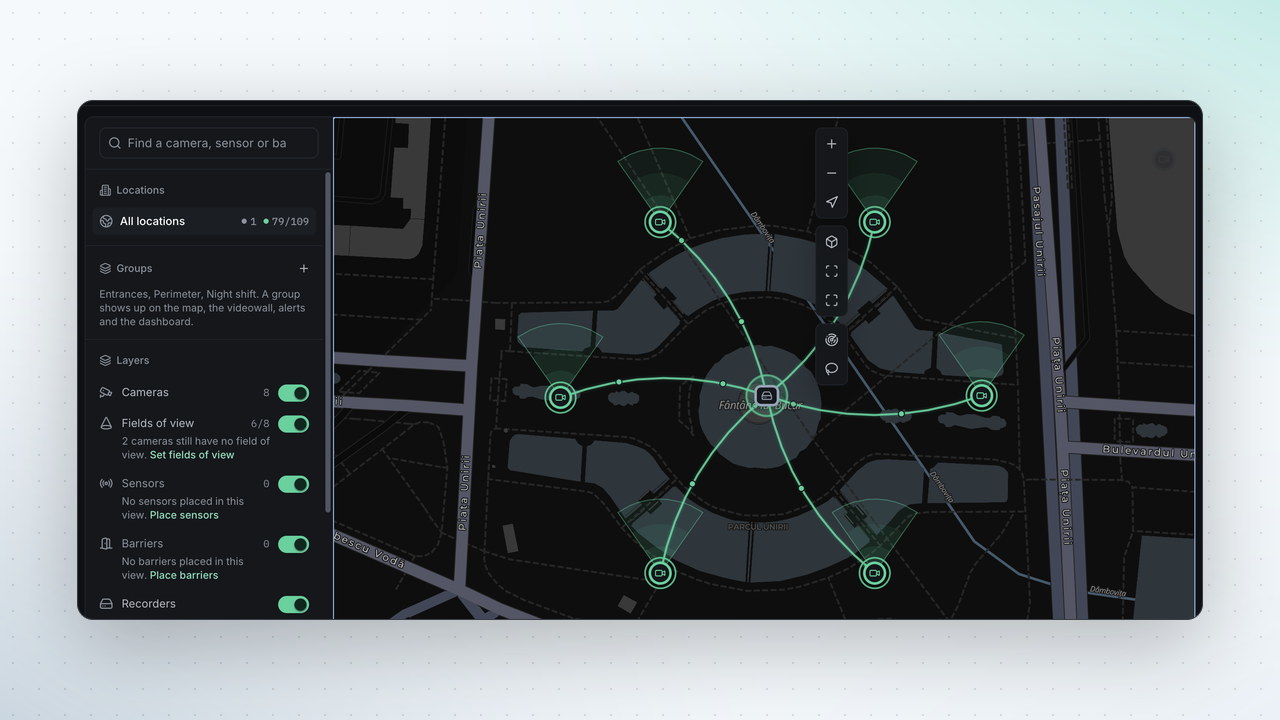
The map of the town
The dispatcher works on a map of the town with every camera, sensor, barrier and recorder and its state. A street camera that went dark, a recorder that is filling up or a barrier left open is seen on the map the same morning. The cameras around a square open from the map as a group, on the screen or on the videowall.
When a report comes in, the last 24 hours are replayed on the map, place by place, before anyone opens a clip.
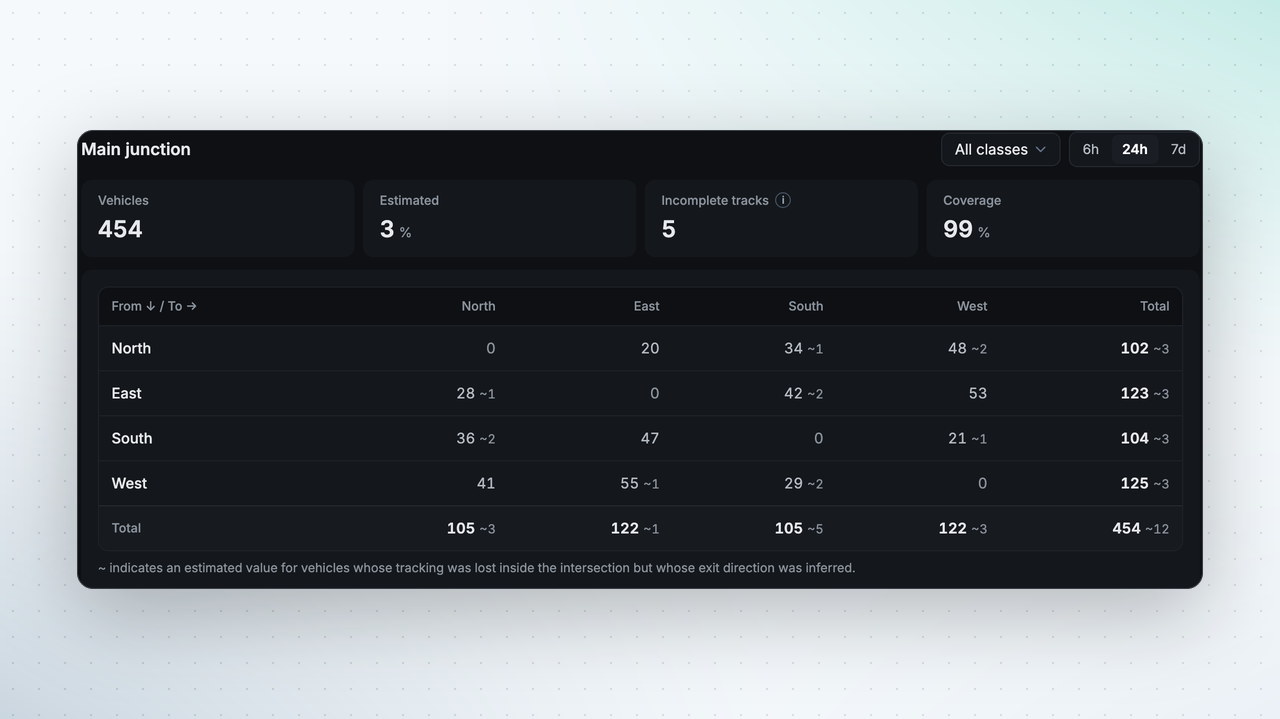
Traffic counts at the junctions
A camera over a junction counts the vehicles from each approach to each exit, by class, around the clock. The counts feed the traffic study, the case for a new roundabout or a one way street, and the check after the scheme is changed, from the same camera.
- Per approach, per turn and per class, with the hour by hour pattern of the day
- The same junction before and after a change
- Exported as a table or sent as a scheduled report to the traffic department
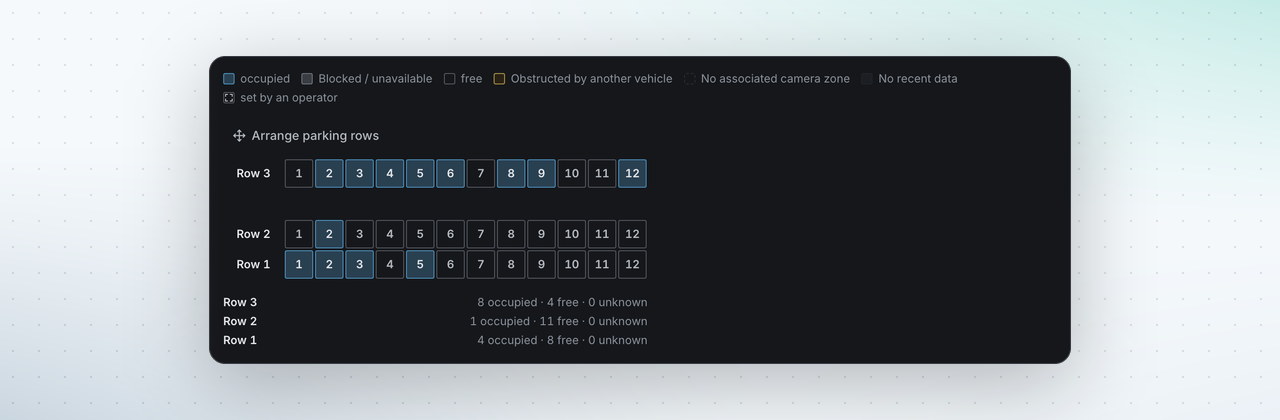
The public car parks
Bays drawn on the camera over a car park give the occupied and free spaces per row, live, with the occupancy over the day; a counting line at the entrance gives the figure for the whole lot. The city sees all its car parks on one board and can show the free spaces to residents.
At the car parks with a barrier, the plate opens it for the residents and the permit holders on the list, and every passage is kept with its picture.
Streets and squares
On a market day or at a concert, counting lines at the entrances of the square give the number of people inside, and a crowding threshold raises an alert before the square is full. Heatmaps drawn over the camera's own view show where people walk and where they stop, over a day, a week or a month, for the market plan, the events and the cleaning rounds.
- Traffic and dwell maps for people and for vehicles
- An unattended object or a crowd past the threshold, with a snapshot and a clip
- Figures per square and per hour in the monthly report to the city hall
Vehicles of interest and the barriers of the city
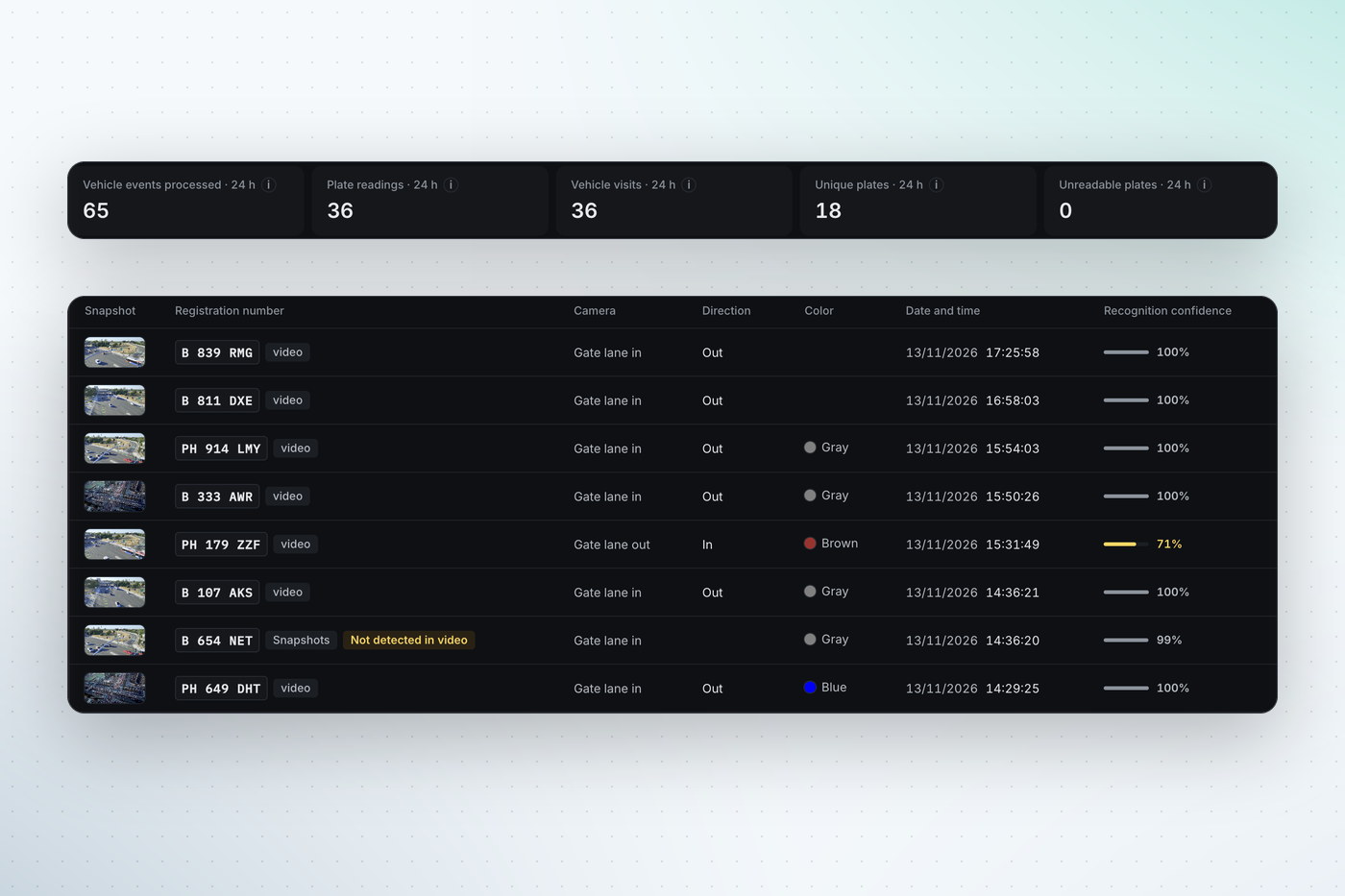
Plates read on the street cameras are matched against the watchlist: a stolen car, a vehicle under a court order, a car reported after a hit and run. The alert reaches the dispatch with the picture and the camera the moment the plate is read, and the route of the vehicle across the town is followed on the map.
At the depot, the city hall and the car parks, the barrier opens for the vehicles on the list, logs every passage with a picture and keeps a manual open for the guard, with the guard's name.
Parks after closing, dumped waste, the same van twice
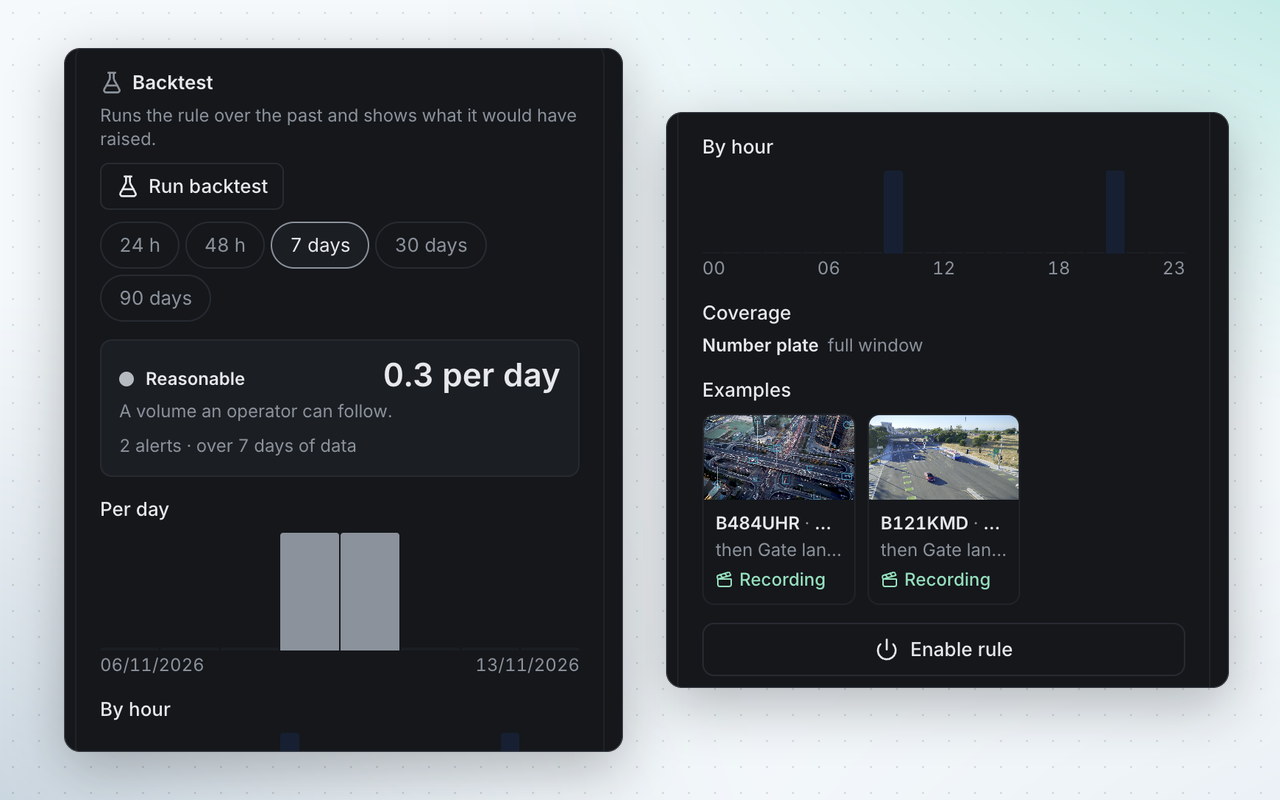
Zones drawn on the camera picture raise an alert when someone stays in a park after closing, when a vehicle stops where it should not or when waste is dumped at a container point. Smart rules go further: the same van at two container points in one night, a person down with nobody around, the gate of the sports ground left open after the last match.
Each rule is tested on the last weeks of recordings before it is switched on. The dispatch sees how many alerts it would have raised and when, so the night shift gets the alerts that matter and not a flood.
The local police dispatch
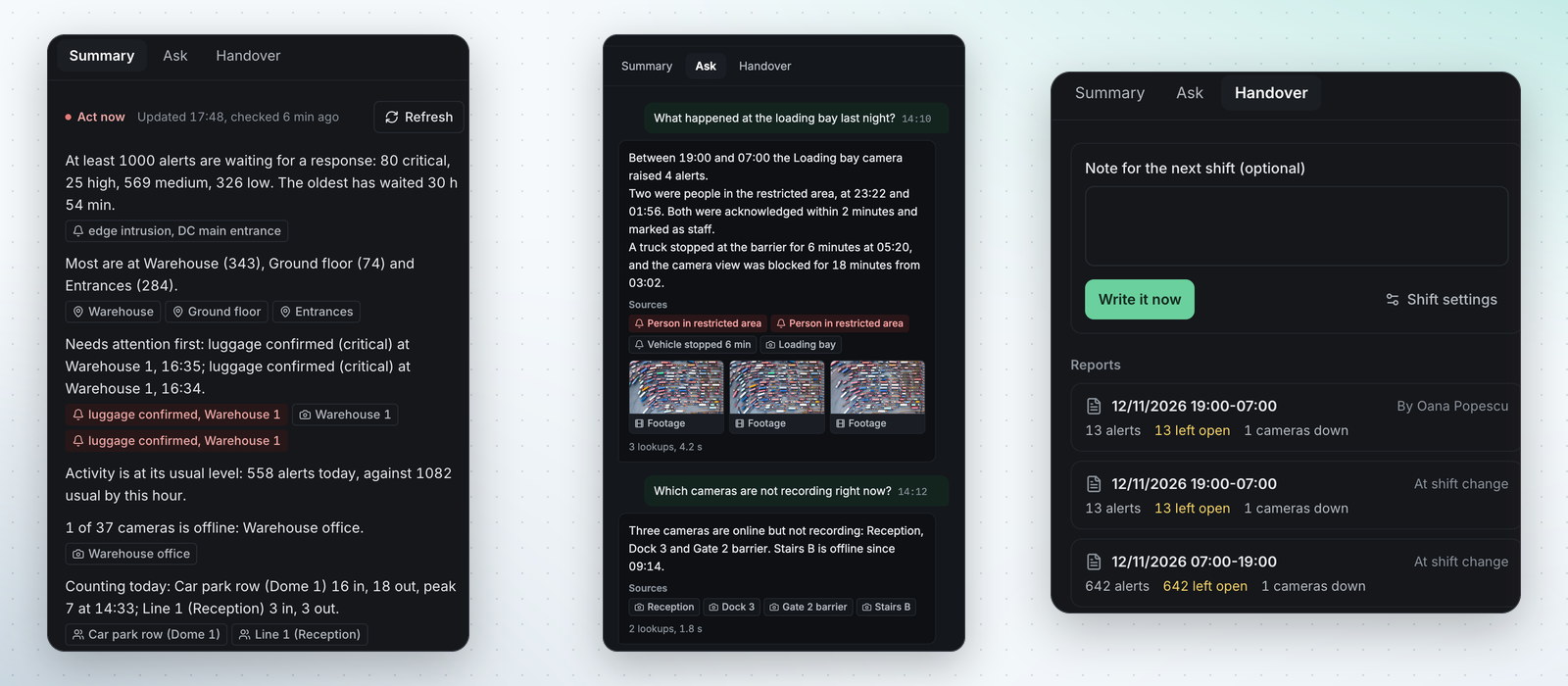
One dashboard for the dispatcher: the live cameras of the moment, the alerts that need a response, review mode to clear the rest fast, and critical alerts that must be acknowledged. The situation summary says in a few lines what happened across the town and which cameras went down.
At each shift change the platform writes the handover: open alerts, incidents of the shift, cameras down, with a note for the next shift, sent by email as a PDF. Questions in plain language about the day are answered with their sources when a language model is connected.
From a sighting to a case file
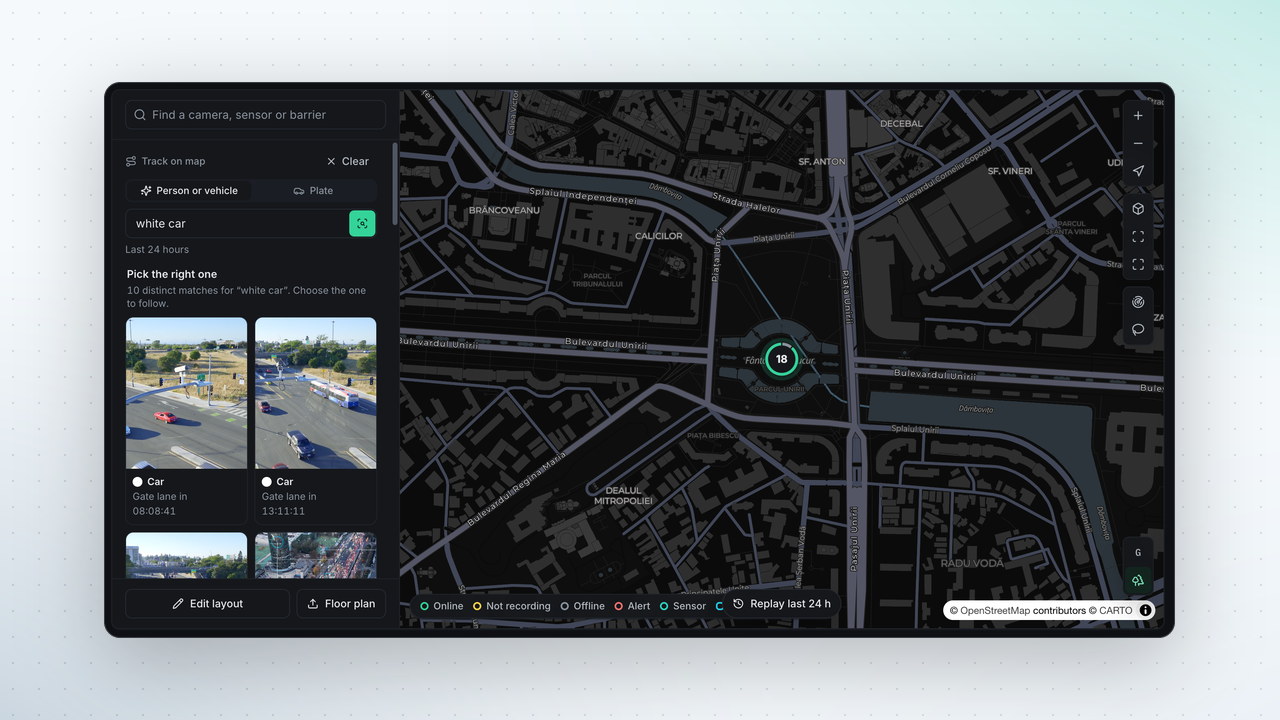
A brawl on the square, a hit and run on the ring road, a break in at the market: the investigation starts from one sighting and follows the person or the vehicle across the cameras of the town, with a clip around each stop.
The route, the clips, the plate reads and the alerts of that hour go into one case file in time order, with a summary. The case leaves as a signed evidence package that verifies outside the platform, for the prosecutor or the court, with the reason for the export recorded.
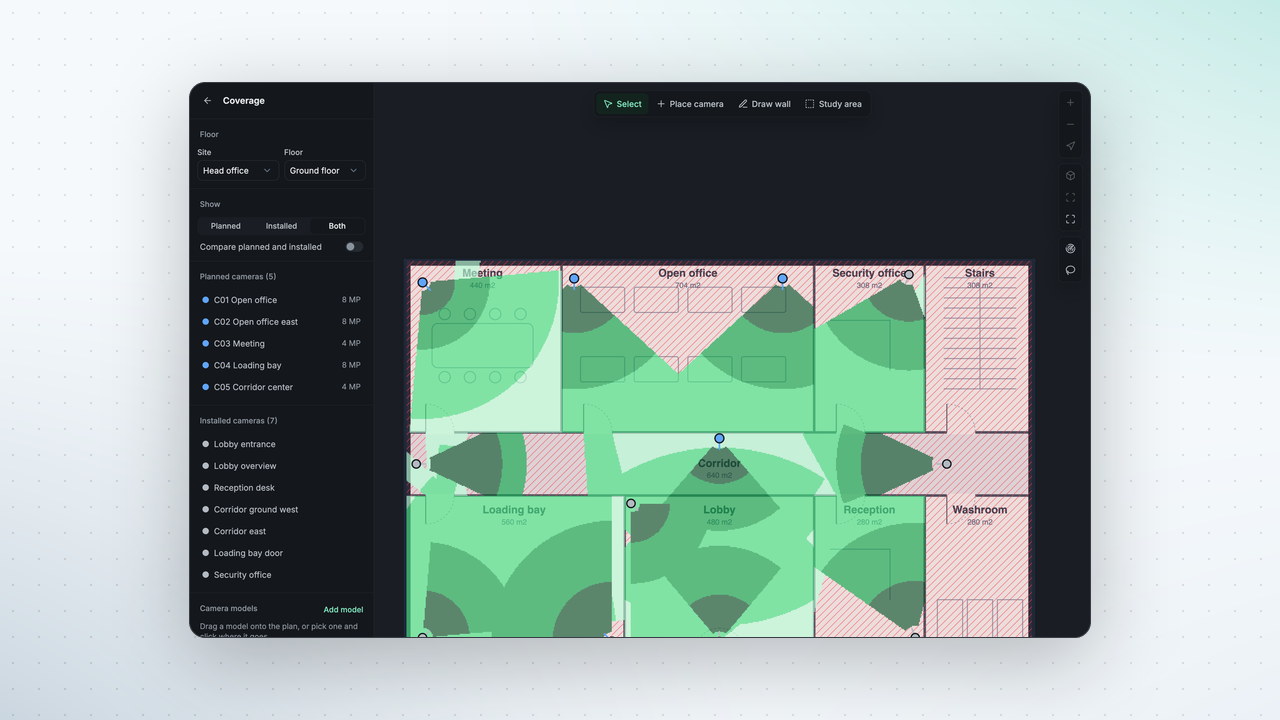
Planning the cameras before the tender
A new pedestrian zone, a square to be rebuilt, a park with no cameras yet: coverage is planned on the real drawing before a camera is bought. Each planned camera shows where it would detect, observe, recognize or identify and where the blind spots remain, and the study prints for the council and the tender file.
Once the cameras are installed they are compared against the plan, so a camera mounted elsewhere than planned shows up at handover.
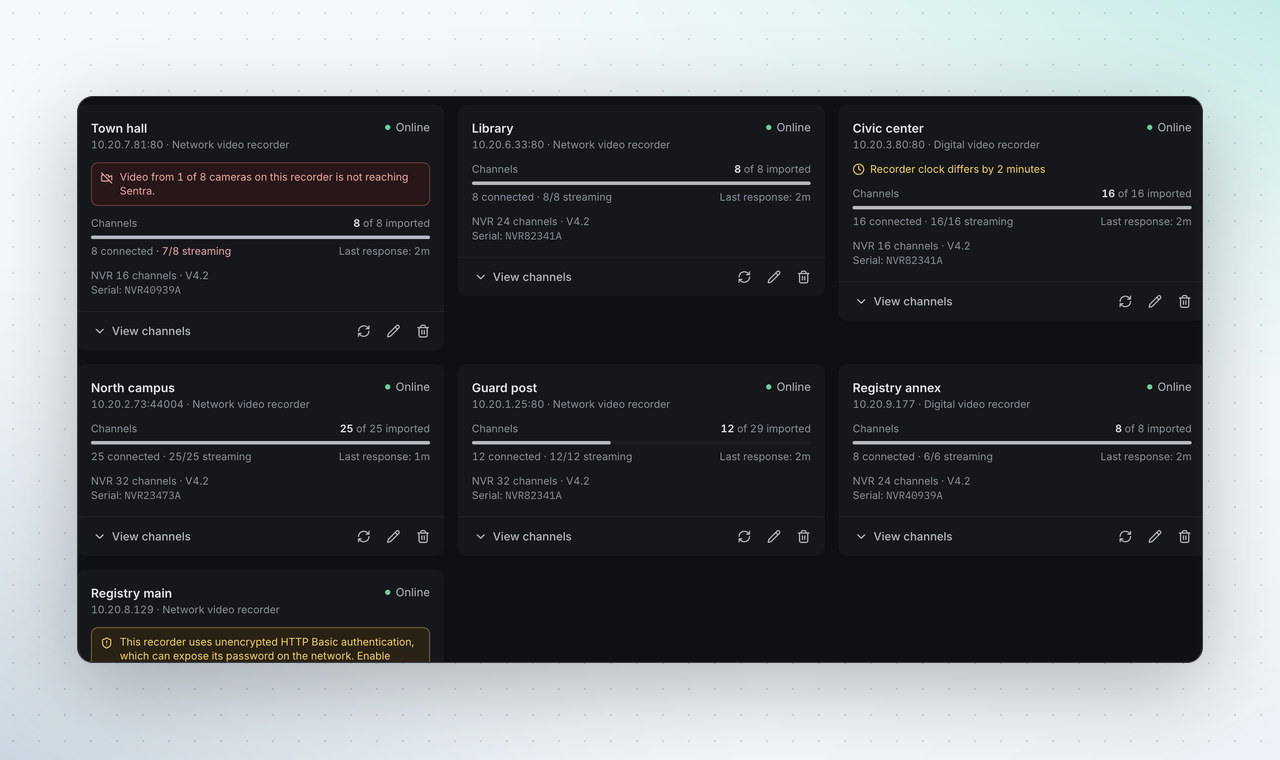
Recorders, roles and the audit trail
The recorders the city already has in the city hall, the depot and the markets connect with their channels, disks and retention, and play back from the same timeline as the street cameras. Each department has its own role: traffic sees the junctions and the car parks, the local police sees alerts and search, the data protection officer reads the audit trail.
Every view, export and change is in the audit trail, retention is enforced per camera, and people are detected, not identified. Scheduled reports with the counts per junction and the car park occupancy go to the city hall by email.
Capabilities on this page: Map, Parking and Junctions, Counting, Heatmaps, Access Control, Zones and Rules, Live Video and Videowalls, Assistant and Shift Handover, Investigations, Coverage Planning, Recordings and Evidence, Reports and Audit.
See it on your own cameras
A demo can run on your cameras or on a Sentra demo site, self hosted or hosted by Sentra. Tell us which events and figures you need, and we prepare it.