
Data centers
Sentra gives a data center one console for the gate, the halls, the cages and the rooms where no camera is allowed, on the cameras and recorders it already has. The contractor's van at the barrier, the technician followed on the floor plan, the temperature in hall 2, the signed evidence a customer asks for after a visit, and an audit trail of every view for the compliance audit. Footage stays on a server the operator owns or in an isolated tenant hosted by Sentra in Romania.
Vehicles on the allowed list open the barrier; each passage is kept with its picture.
A person on a hall or entrance camera outside the schedule raises an alert.
Sensors in the halls, with thresholds managed from the console.
Who opened which recording, exported what, and changed which setting.
A day on the operations desk
The same cameras, sensors and rules from the first shift to the night. All use cases
- 07:50Gate
A contractor's van is on the list for today only. The barrier opens and the passage is kept with its picture.
Access Control - 10:30Floor plan
The desk follows the contractor from the gate to the cage on the floor plan, camera by camera, and checks that the escort was there.
Map - 14:20Hall
Temperature in hall 2 drifts above the threshold. The alert is critical and must be acknowledged; the readings of the last hours are in the history.
Sensors - 22:10Hall
A person on a hall camera outside the access schedule raises an alert. The rule was tested on the last month before it went live.
AI Detection and Alerts - Next dayAudit
A customer asks for evidence of the visit. A signed package leaves with the reason recorded, and the auditor reads who viewed what.
Reports and Audit
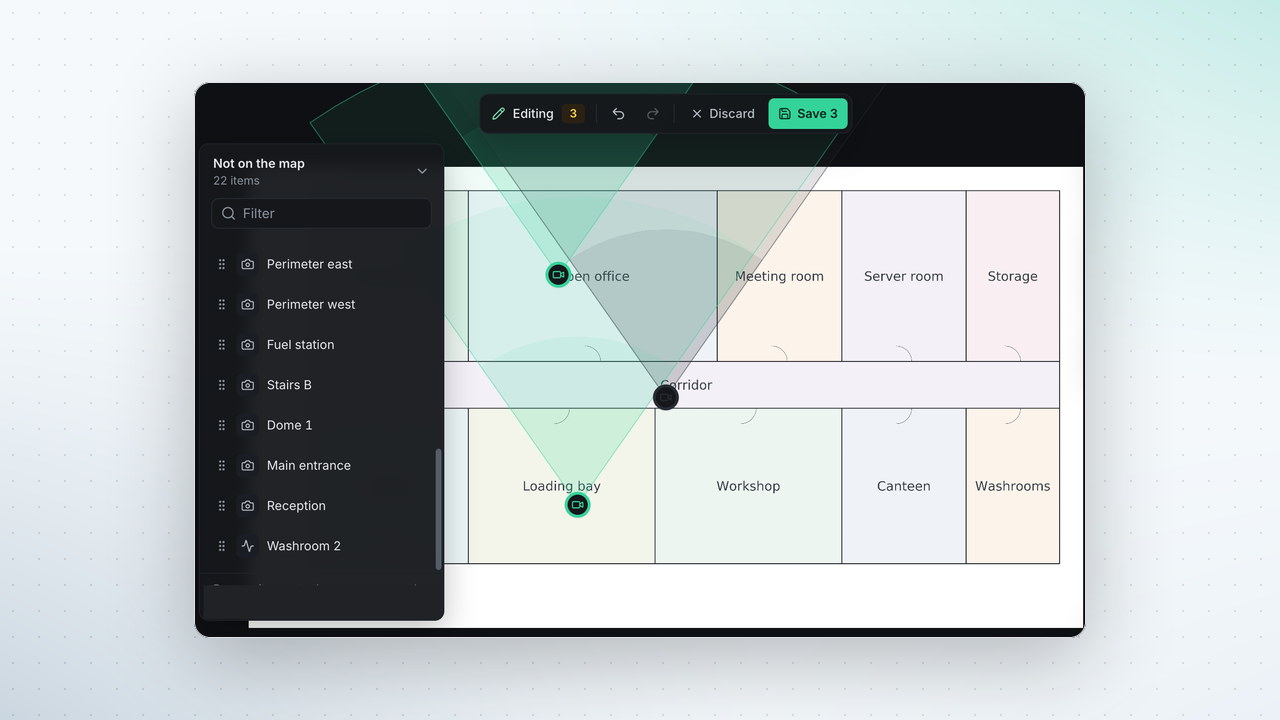
Halls, cages and corridors on the floor plan
The floor plan of each hall comes from the architect's drawing, with its storeys, rooms and layers. Every camera sits on it with its field of view, every sensor in its room, every barrier at its gate, so the desk sees at once which camera watches a cage door or a corridor, and which one is dark, moved or blocked.
A person is followed from the gate to the cage across the cameras on the plan, with a clip around each sighting. The cameras of one hall open as a group on the videowall with one selection.
The recorders already in the halls
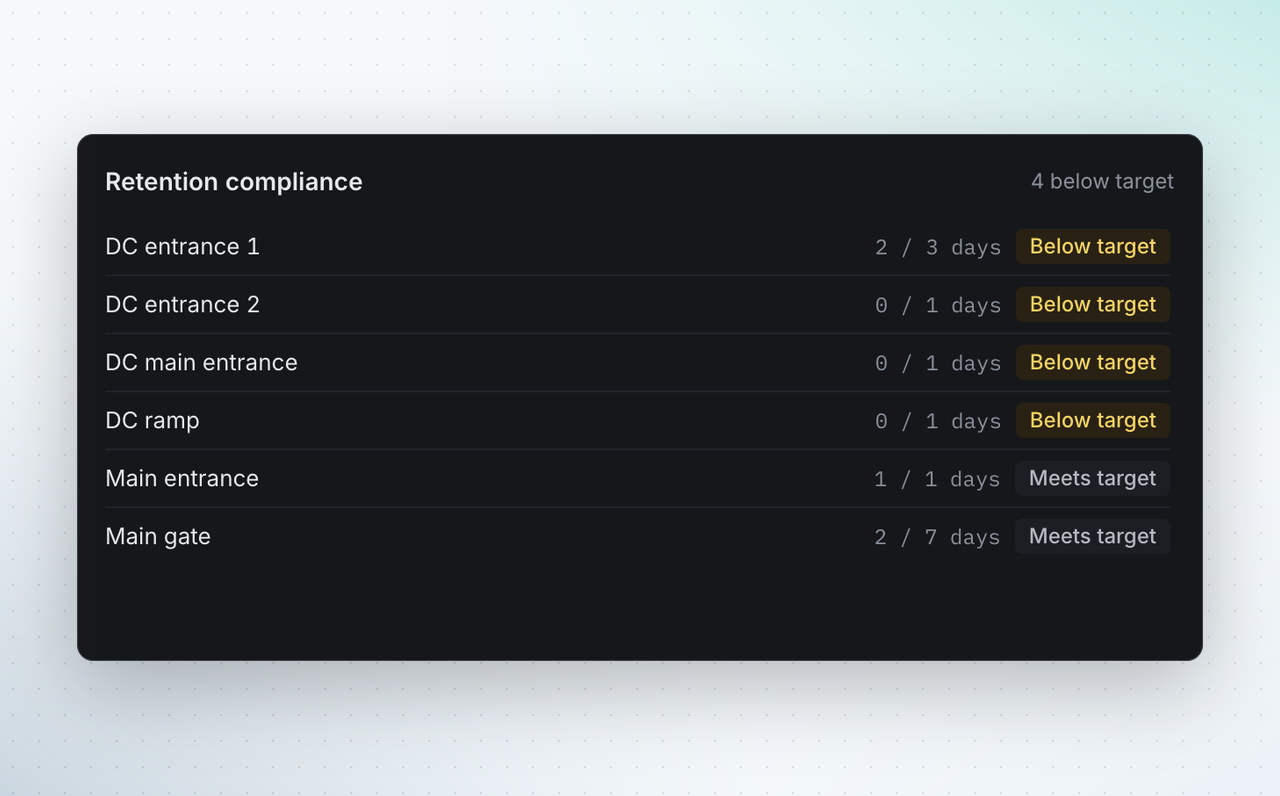
The recorders the operator already runs keep their role: their channels show in the console, their disks stay the storage behind them, and retention is enforced per camera. On the map each recorder shows which cameras depend on it, so the impact of a failed recorder is known before it fails.
A camera kept for less time than the policy says is listed with the gap, for the next compliance review.
The gate and the vehicle list
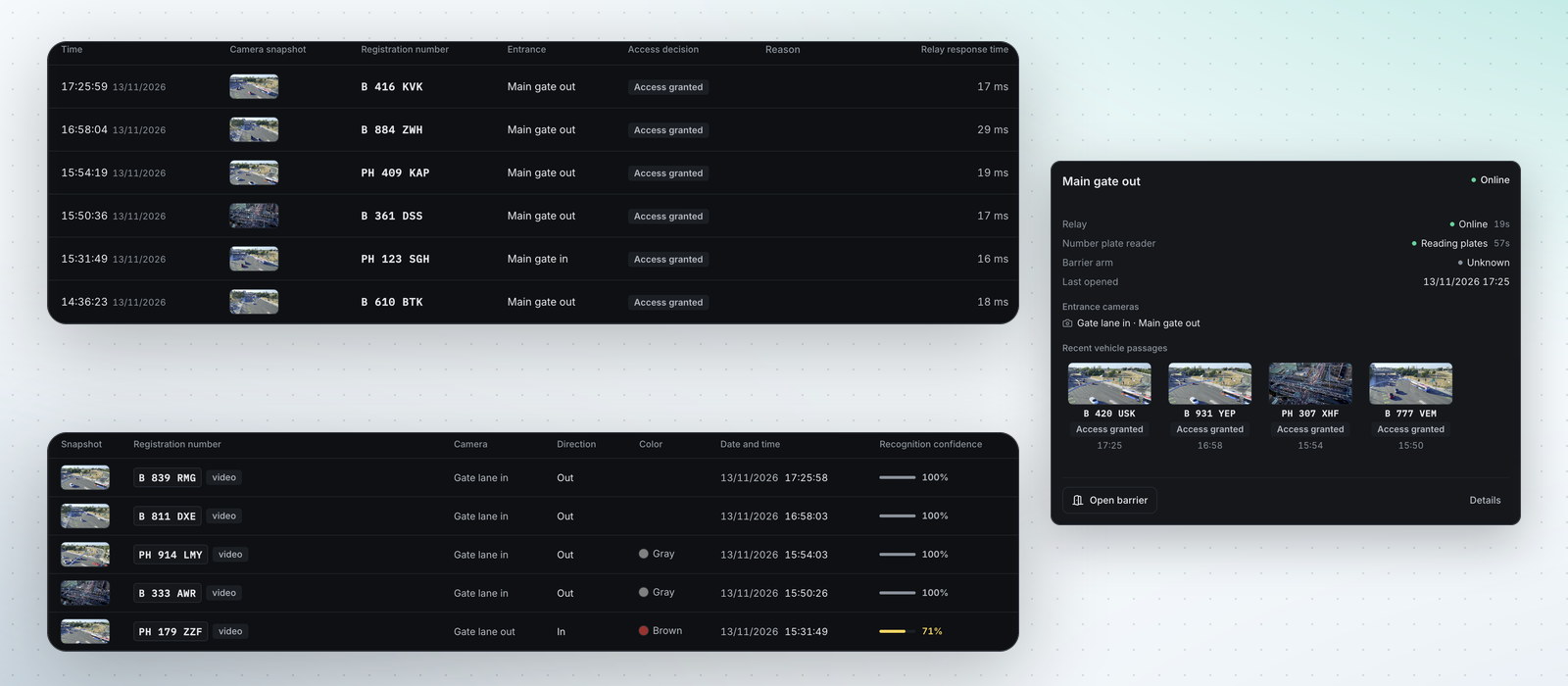
The barrier opens for the vehicles on the list, the staff, the contractors for the day, the courier of the week, and every passage is kept with its picture. A read that is not on the list is denied and kept, and a manual open by the guard is written to the trail with the guard's name.
- Lists with validity dates and the entrances they open, imported in bulk
- The plate searched later with the color of the vehicle
- The activity of the gate, with the counters of the day, in one log
Environment in the halls, and who was in the room
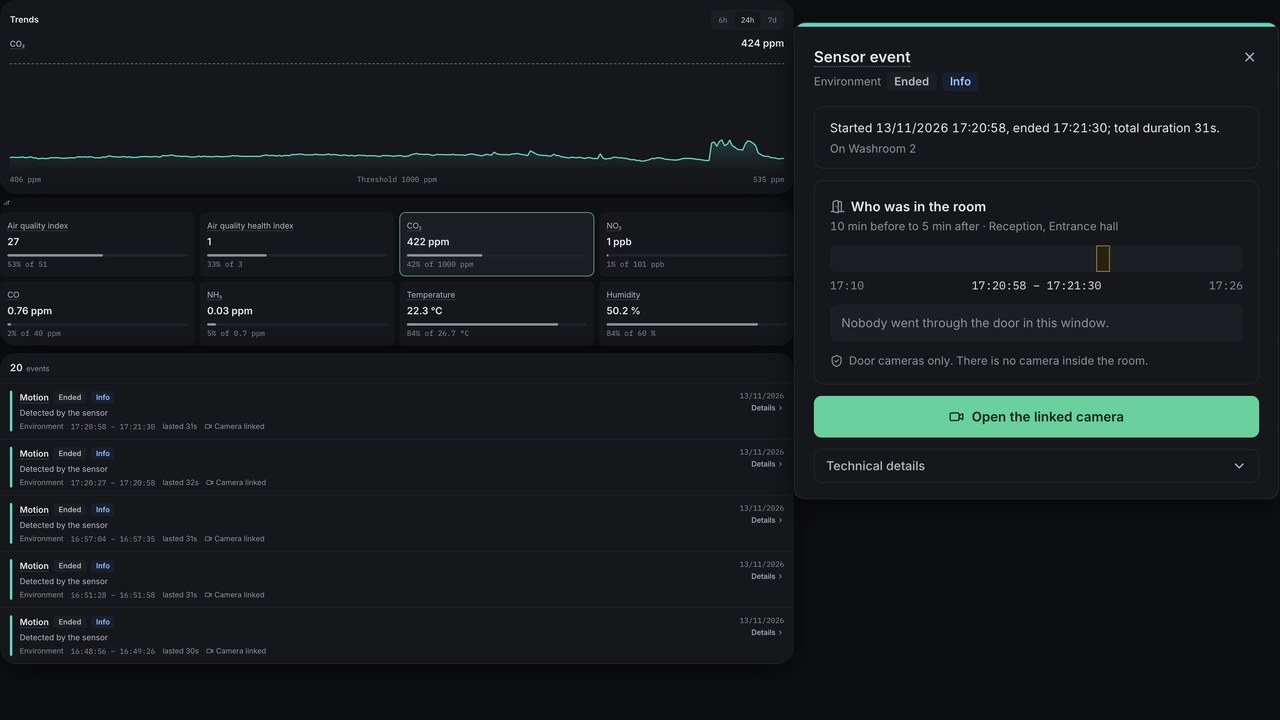
Smart environmental sensors add temperature, humidity, pressure, air quality and smoke to the same console as the cameras. A threshold raises an alert when a hall drifts out of range, the readings are kept as a history, and a sensor that stops answering raises one alert of its own.
In the battery room, the generator room or a customer's cage where no camera is allowed, the sensor does the work. When it reports an event, the cameras at the door show who went in before it and who came out after it.
After hours and the loading bay: rules tested on history
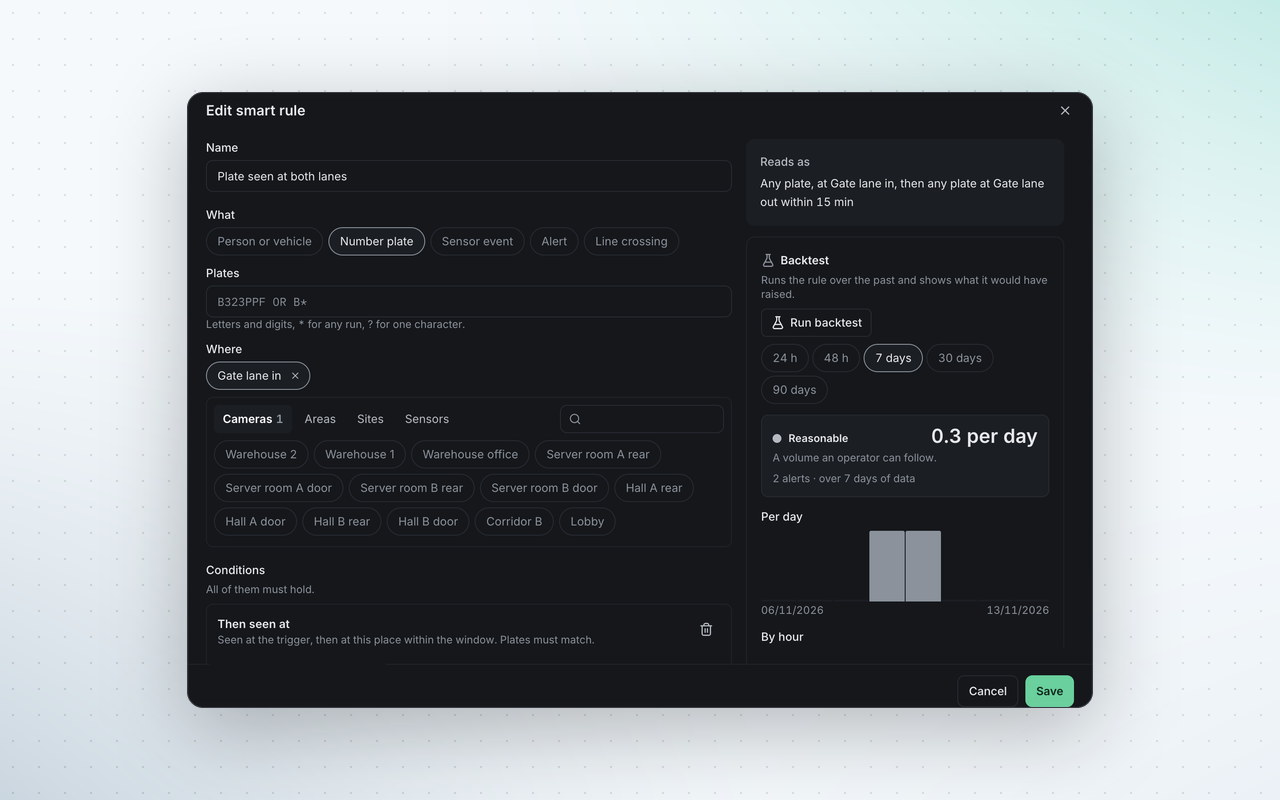
A person on a hall camera outside the access schedule, a vehicle at the loading bay longer than a delivery takes, a cage door opened with no ticket for that row, a contractor seen in a hall that was not on the ticket: smart rules over tracks, plates, sensor events and alerts raise the alert, with the clip.
Each rule is tested on the last weeks of recordings before it is switched on, so the desk knows how often it would have fired and on which nights. The analytics already running in the cameras feed the same inbox.
The operations desk and the shift handover
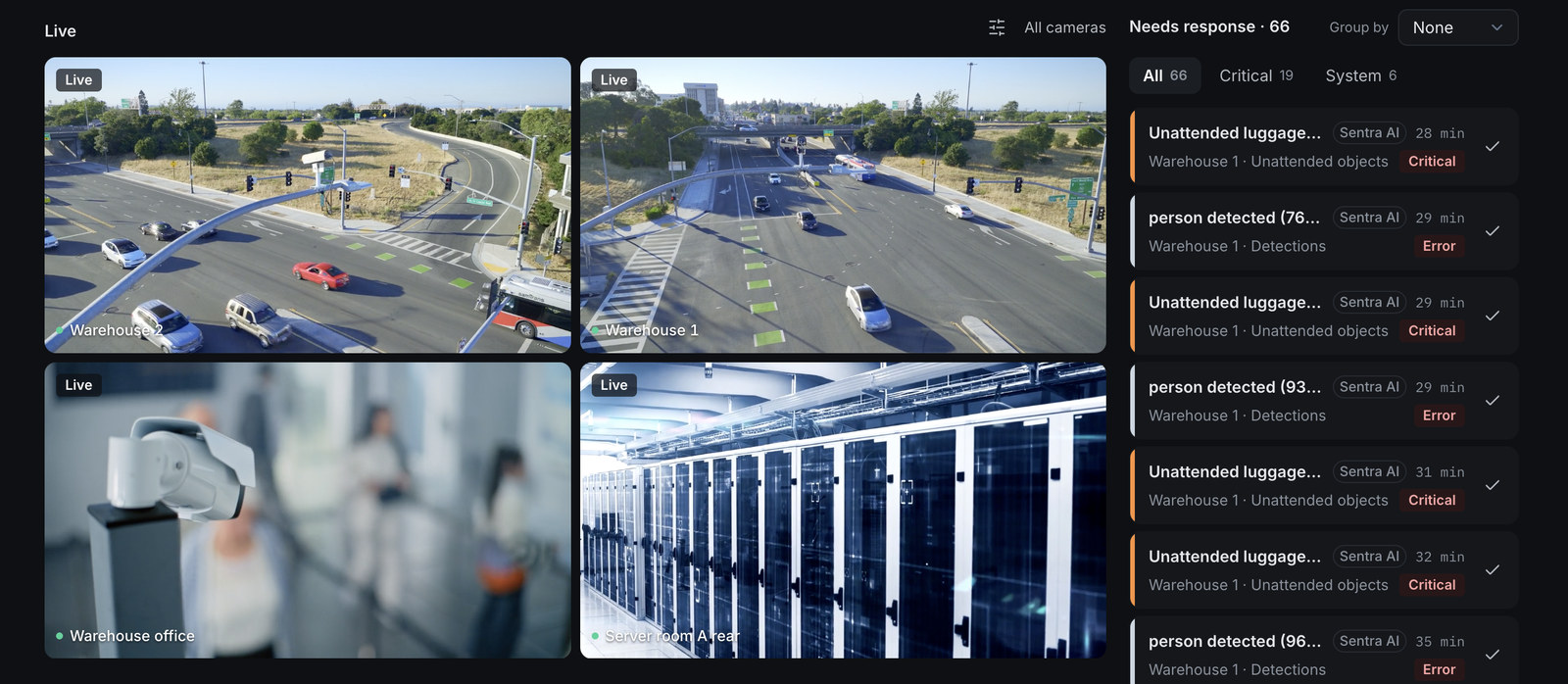
The desk works from one dashboard: the live cameras of the moment, the alerts that need a response, review mode for the rest, and critical alerts that must be acknowledged. Pop ups and sounds on the desk, push on the phone of the engineer on call, email and SMS by each person's own rules.
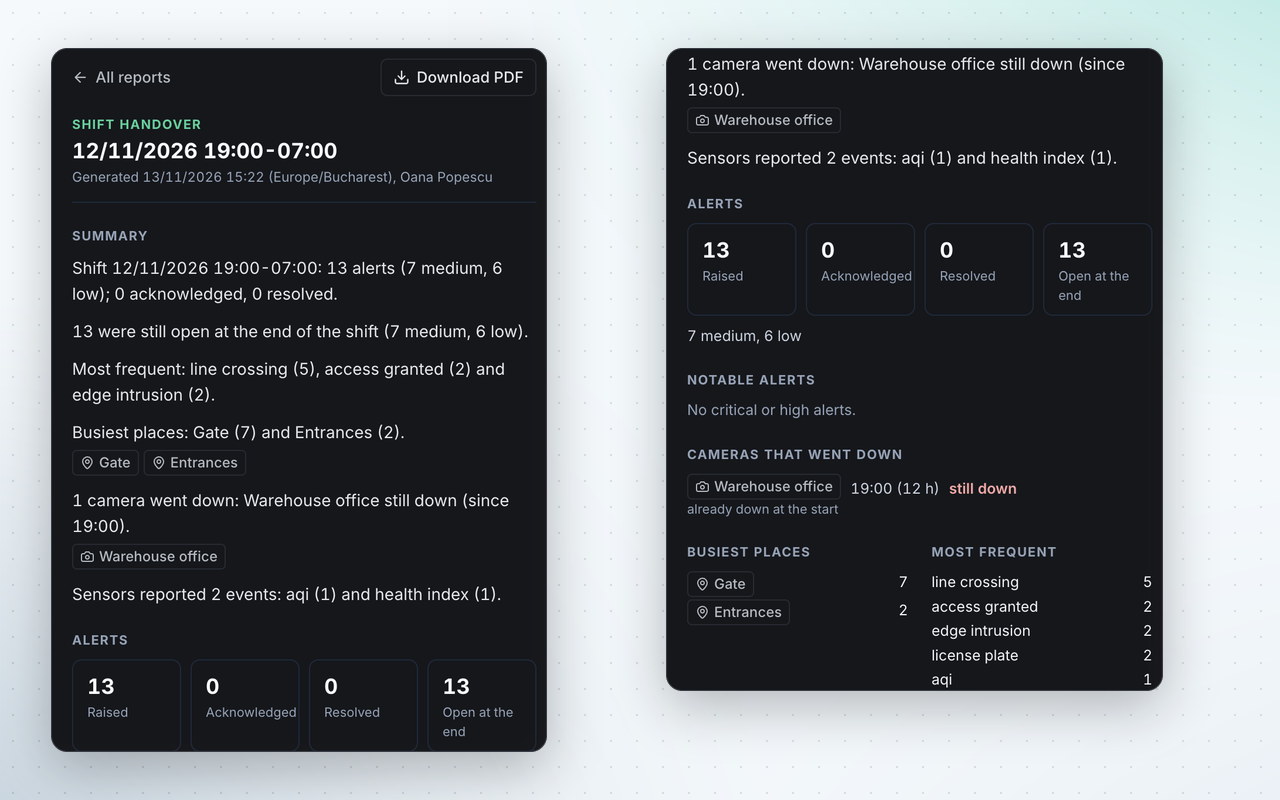
At each shift change the platform writes the handover: what happened, what is still open, which cameras went down and which sensors are out of range, with a note for the next shift, sent by email as a PDF. The situation summary gives the same picture at any hour, and questions in plain language are answered with their sources when a language model is connected.
Evidence for a customer
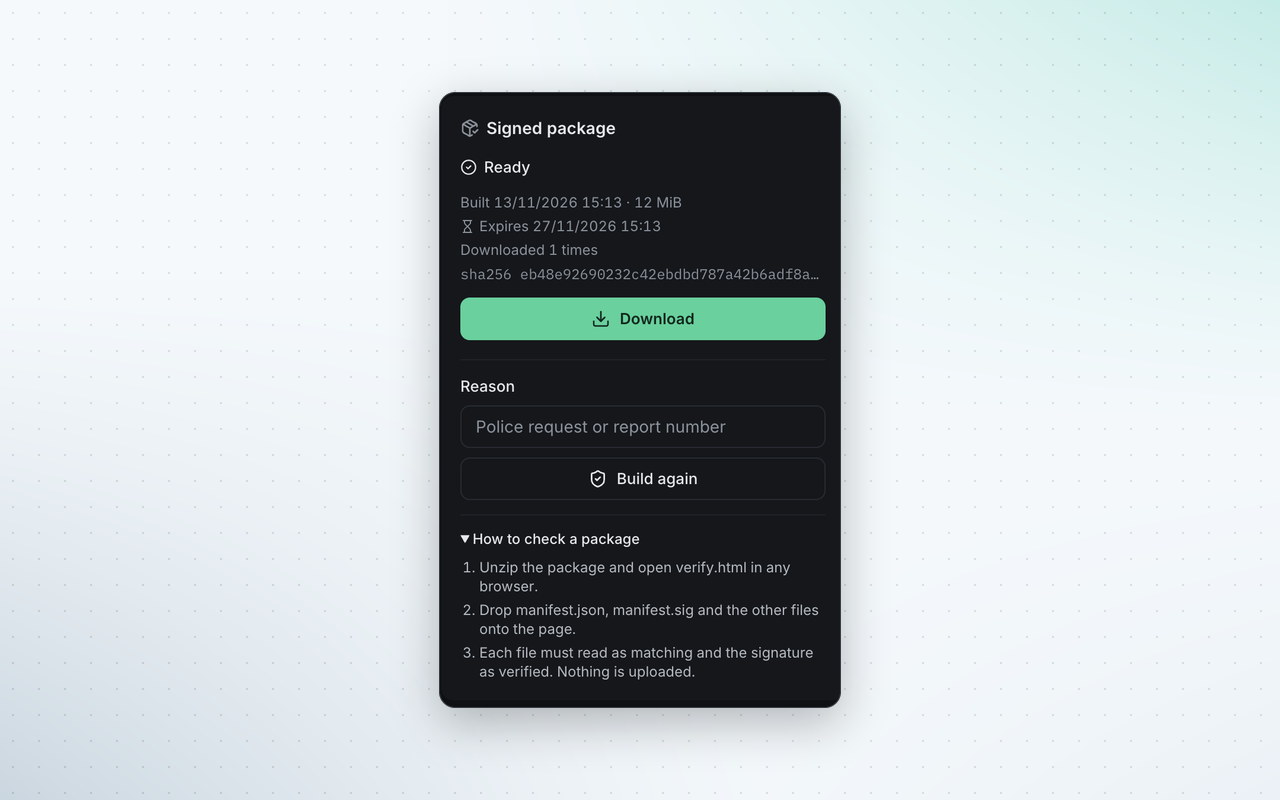
A customer asks who was at its cage on Tuesday, an insurer asks for the hour before a failure, a contractor disputes a visit. The sightings, the plate reads, the sensor events and the clips around them go into one case file in time order, with a summary.
The case leaves as a signed evidence package that verifies outside the platform, on the customer's side, with the reason for the export recorded. Recordings step frame by frame, and every export is signed.
Audit for compliance
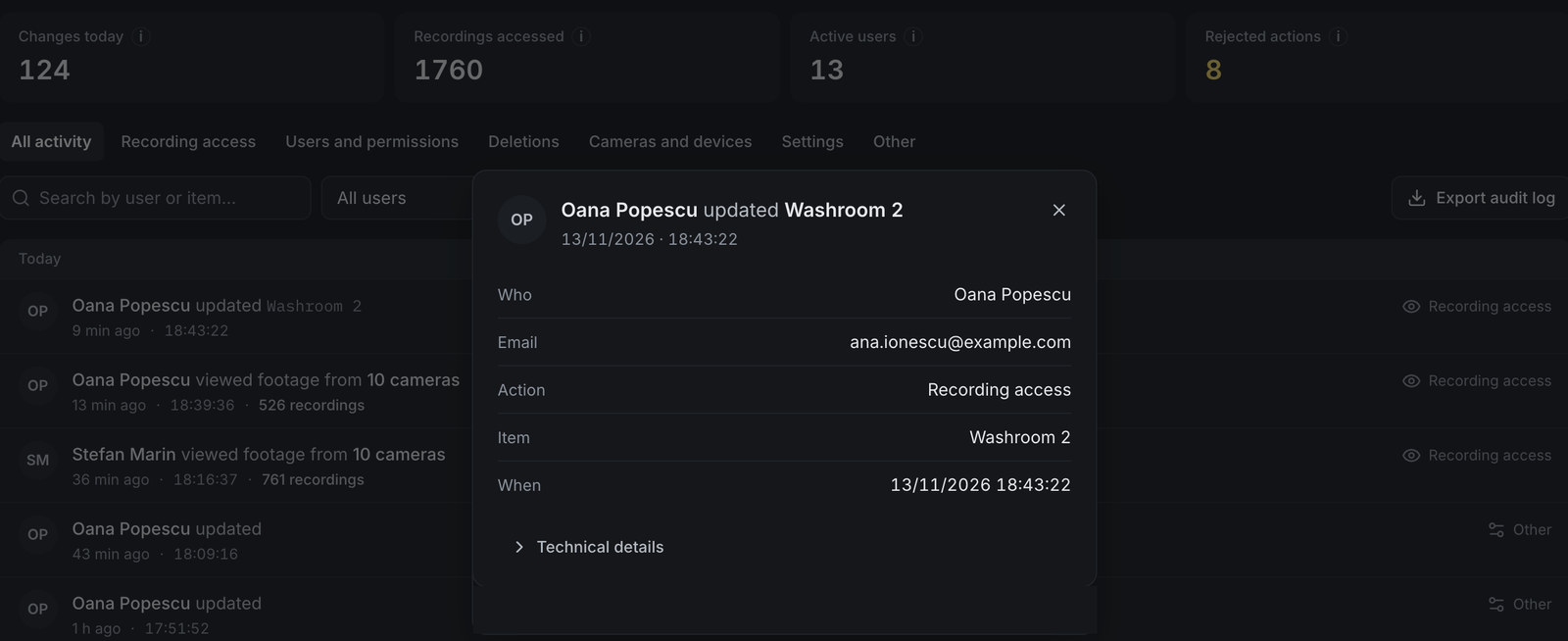
Every view of a recording, every export, every change to a rule or a list is written to the audit trail, with refused attempts as well. Roles limit each person to their halls and their rights: an auditor reads the trail and nothing else, a customer's technician sees the cameras of that cage and nothing more.
- The trail filtered by person, camera or action, and downloaded for the audit
- Retention per camera, with the cameras below target listed
- Scheduled reports by email with the month's events, gate passages and sensor events
Planning the cameras of a new hall
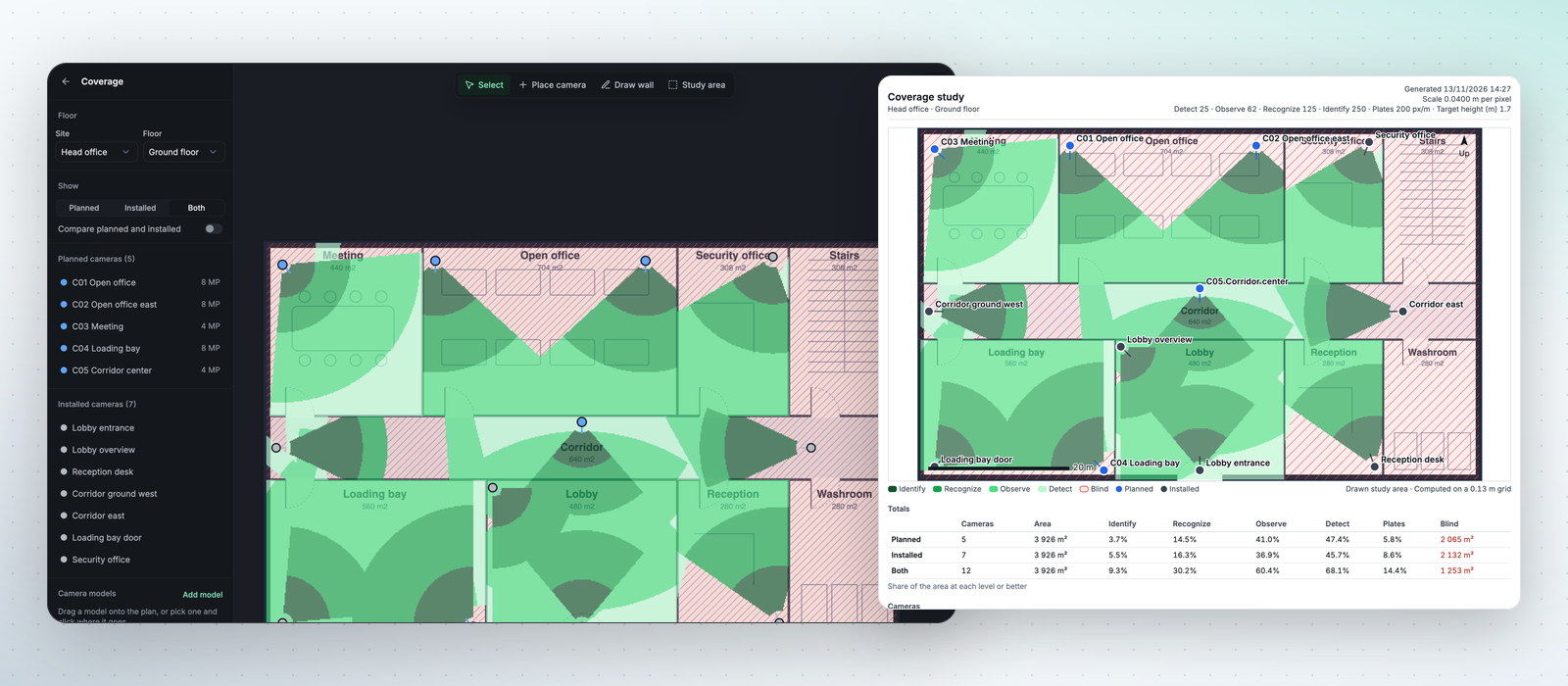
Before the fit out of a new hall, coverage is planned on the drawing: the cage doors at the identify level, the corridors at the observe level, the loading bay and the gate with their plates readable. Blind spots show on the plan, and the study prints for the customer's security review.
When the installer hands over, the installed cameras are compared against the plan, camera by camera.
Capabilities on this page: Map, Recordings and Evidence, Access Control, Sensors, Zones and Rules, AI Detection and Alerts, Live Video and Videowalls, Assistant and Shift Handover, Investigations, Reports and Audit, Coverage Planning.
See it on your own cameras
A demo can run on your cameras or on a Sentra demo site, self hosted or hosted by Sentra. Tell us which events and figures you need, and we prepare it.