

Healthcare
Sentra gives a hospital one picture of its entrances, corridors, waiting rooms, car parks and the rooms where a camera is not acceptable, on the cameras and recorders it already has. A patient on the ground in a corridor at night, the ambulance at the barrier, the waiting room filling up, a call for help from a bathroom and the record of each incident, in one console for the security desk and the facility manager. Footage stays on a server the hospital owns or in an isolated tenant hosted by Sentra, and every view is written to the audit trail.
A person on the ground in a corridor, a stairwell or a car park raises a critical alert with a snapshot.
Sensors detect vaping, aggression and calls for help with no image of anyone.
Recordings opened, exports and setting changes logged, with retention per camera.
Counting lines at the entrances, with an alert when a threshold is passed.
A day at the hospital
The same cameras, sensors and rules from the first shift to the night. All use cases
- 08:00Waiting room
The waiting room fills up. Counting lines at its doors show the occupancy live, and the desk gets an alert above the threshold.
Counting - 09:40Ambulance bay
An ambulance reaches the barrier. Its plate is on the list, the barrier opens, and the bay's camera is on the desk's wall.
Access Control - 15:10Bathroom
A sensor in a patient bathroom detects a call for help. The event reaches the nurses' station and the desk, with no camera in the room.
Sensors - 02:30Corridor
A person on the ground in a corridor raises a critical alert that must be acknowledged, with a clip, and clears once the spot is empty.
Zones and Rules - 07:00Security desk
The night shift hands over. The report lists the alerts of the night, what is still open and the cameras that went down, and goes to the head of security by email.
Assistant and Shift Handover
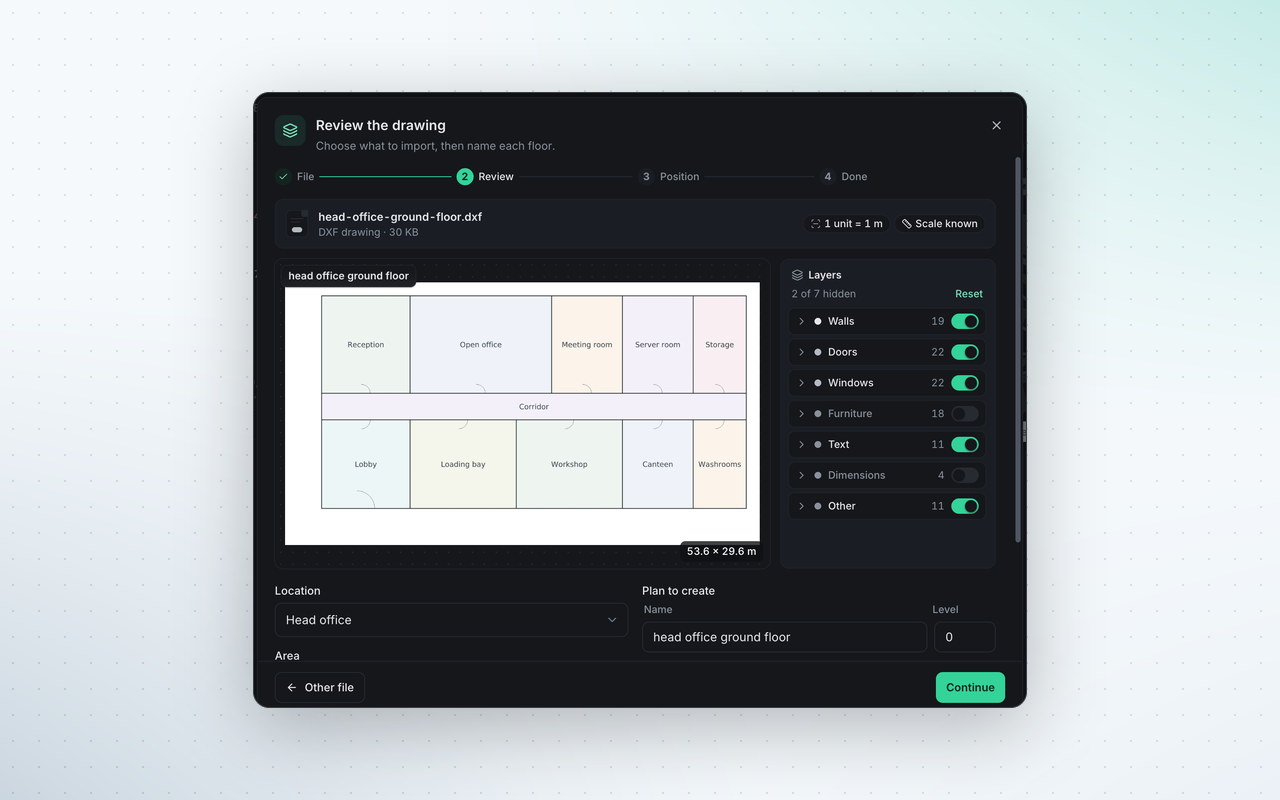
The hospital on the map and the floor plans
The architect's drawings become floor plans, level by level, with the wards, corridors and rooms, and every camera, sensor, barrier and recorder sits on them with its state. When an alert arrives, the desk sees which corridor and which cameras are around it, and opens them with one click. The grounds, the car parks and the clinics in town sit on the same map.
The shift starts with the replay of the last 24 hours. The recorders each building already has connect with their channels and retention, so a camera that stops recording is seen the same day.
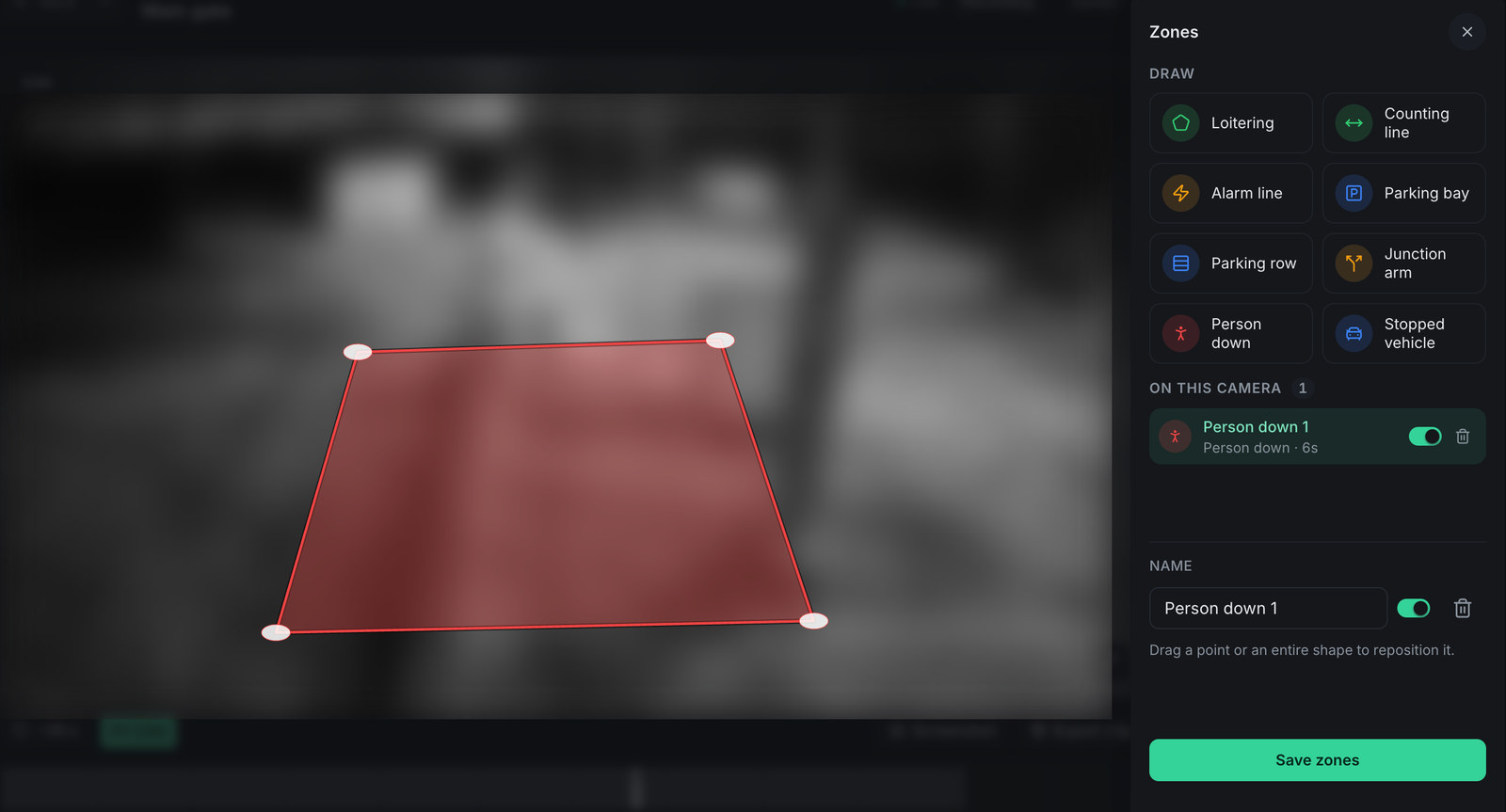
Falls in corridors and stairwells
A person down area on the cameras of the corridors, the stairwells and the car park raises an alert when someone stays on the ground longer than the time set. The alert is critical: a pop up and a sound at the desk, a push on the phone of the guard on the floor, and an acknowledgement that cannot be skipped. It clears when the spot is empty.
- Time on the ground set per area, shorter in the ward corridors than in the car park
- The clip replays at the desk before the guard arrives
- The alerts of the night triaged in review mode in the morning
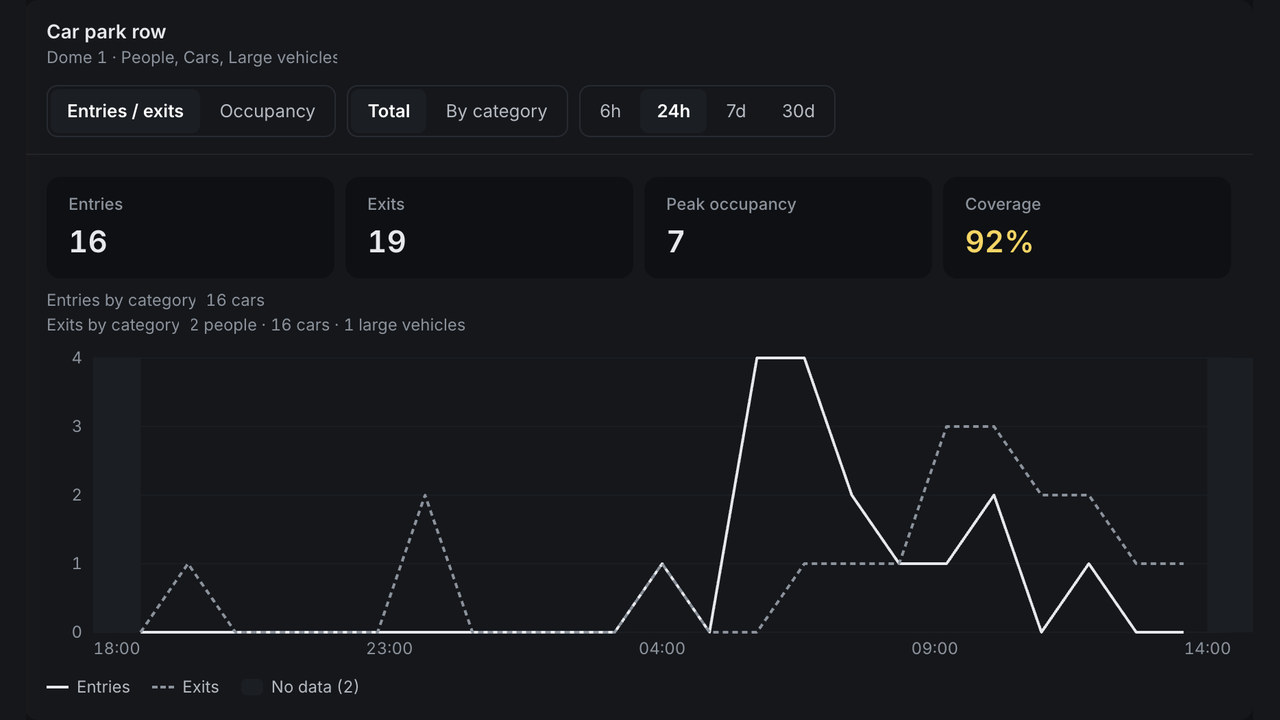
Waiting rooms and the entrance hall
Counting lines at the doors of the waiting rooms and the entrance hall give the occupancy live, with an alert above the threshold, and the peak hour of each day for the staffing plan. Heatmaps show where people wait and where they queue: the registration desk, the lift lobby, the corridor outside radiology.
Unattended luggage in the hall raises an alert with a picture, and loitering zones cover the entrance at night.
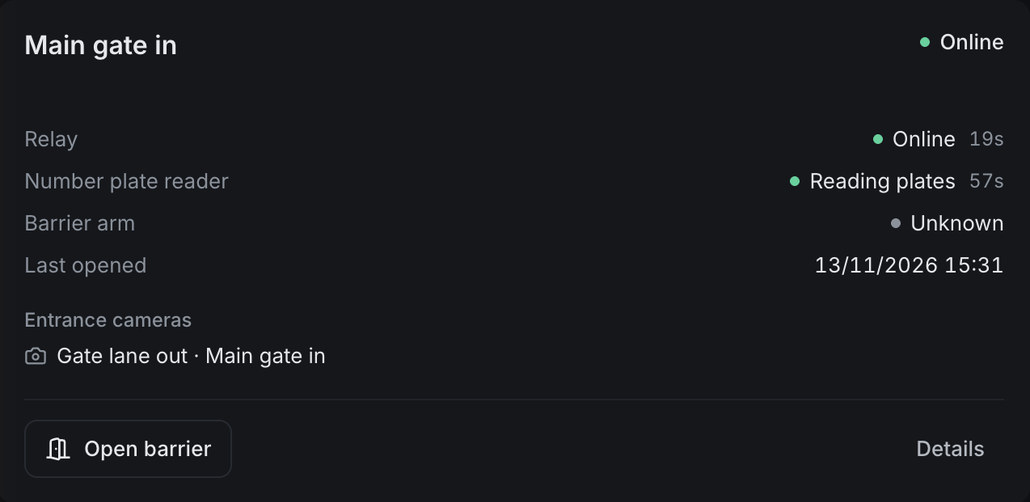
The ambulance bay, the barrier and the car parks
Plates are read at the barrier. Ambulances, staff and the suppliers on the list open it without a guard, visitors are logged with a picture, and the guard opens by hand from the desk. A vehicle that stops in the ambulance bay longer than allowed raises an alert, so the bay stays clear.
A camera over the car park knows which bays are free and which row is full, and a counting line at the entrance knows how many cars are inside. Occupancy per car park sits on one board, for the desk and for a screen at the entrance.
Bathrooms, changing rooms and quiet rooms, with no camera
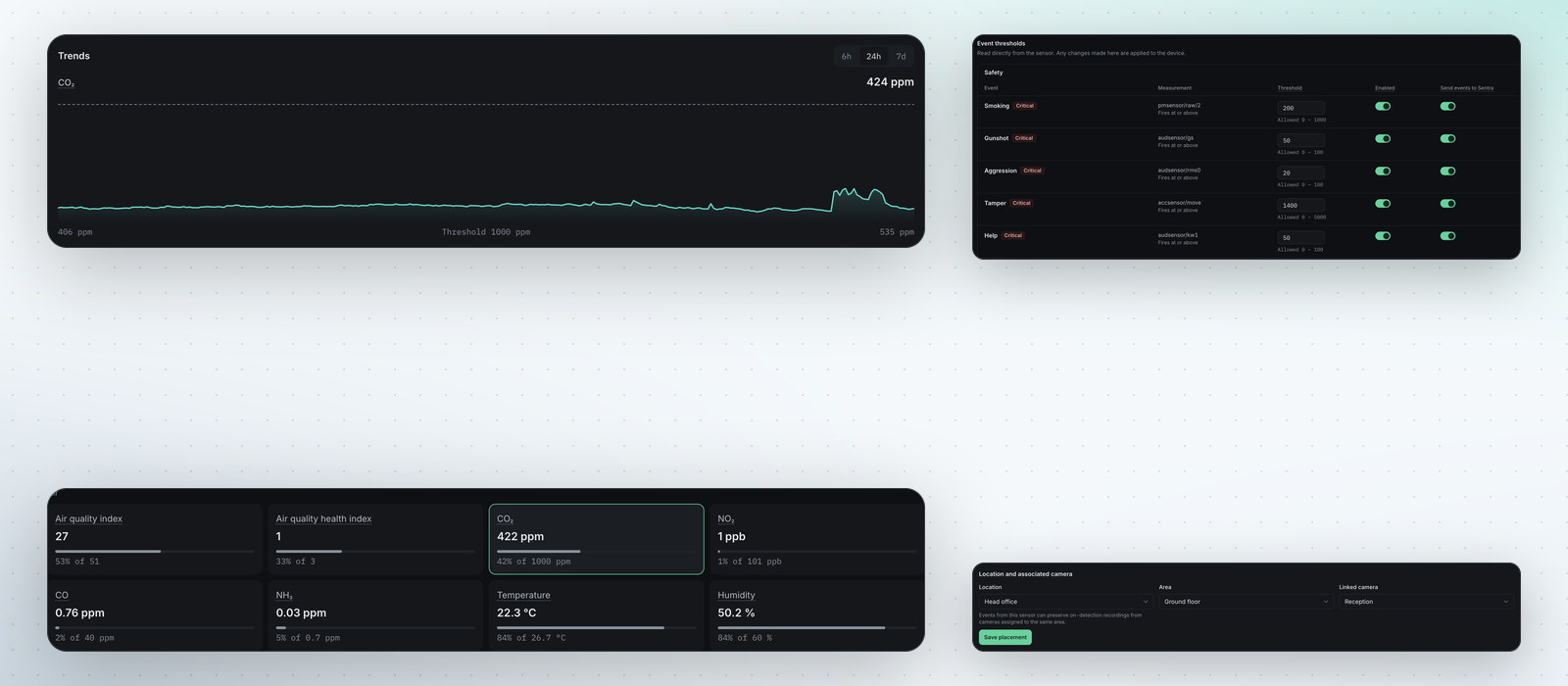
Where a camera is not acceptable, a sensor covers the room: a call for help, aggression, smoking and vaping, a device tampered with. The event reaches the same inbox as the camera alerts, with no image of anyone, and the door cameras show who went through the door around the event.
The same sensors measure carbon dioxide, particulates, temperature and humidity in the wards and the waiting rooms, with a history per room and an alert when a threshold is passed.
Staff safety and the pharmacy at night
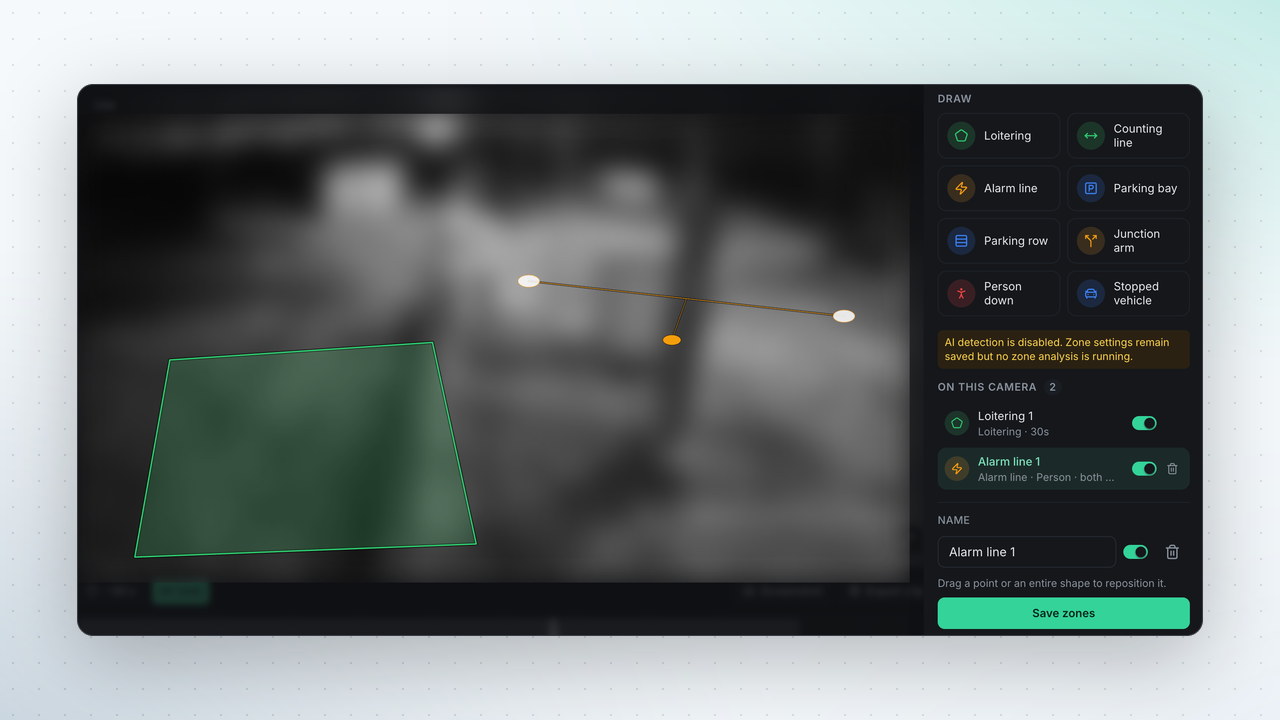
Loitering zones cover the pharmacy door, the drug store and the emergency entrance at night, and a sensor at the triage desk detects aggression. Smart rules tie the pieces together: a person at the pharmacy door outside opening hours, a sensor event with movement at the door, a vehicle stopped at the emergency entrance for longer than a drop off.
Each rule runs on the last weeks of recordings before it goes live, with the alerts it would have raised and examples, so the desk gets the ones that matter. Severities and categories are set per hospital.
Planning cameras for a new wing
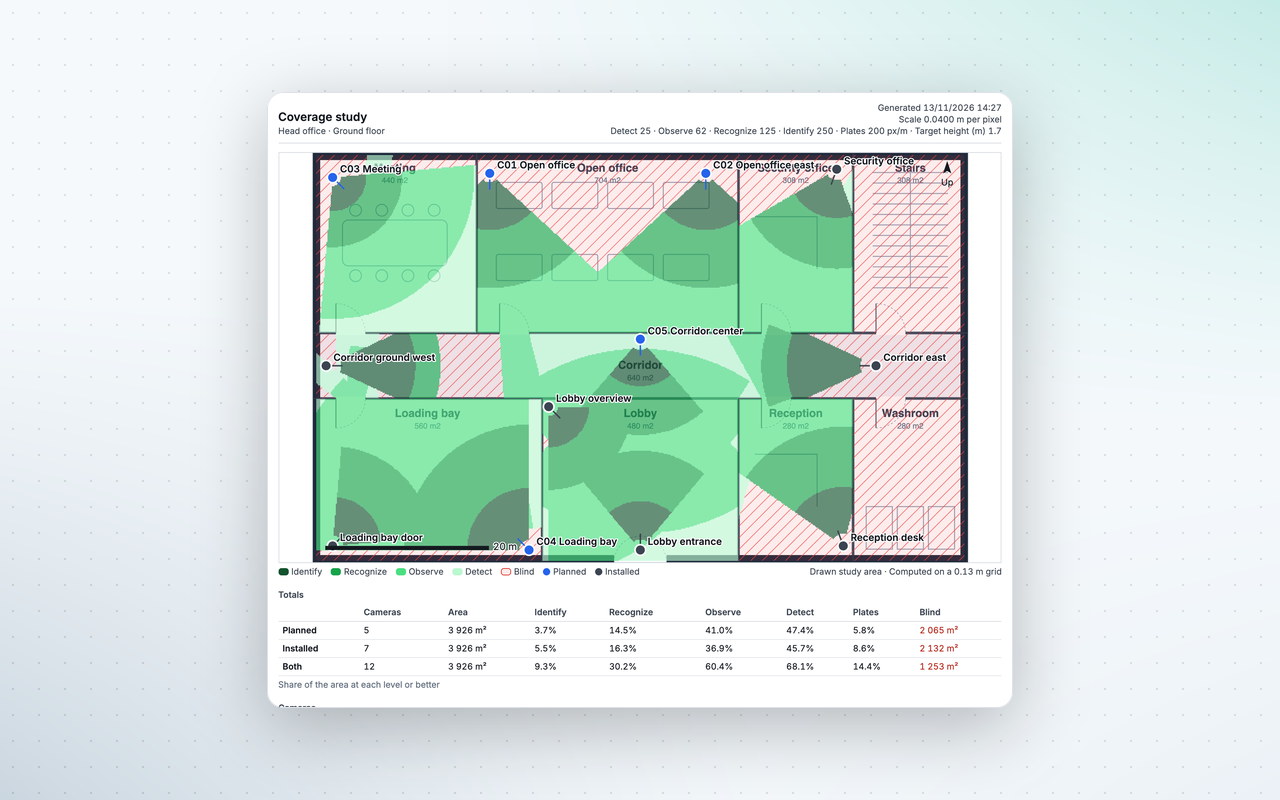
A new wing, a car park or an extension starts on the real drawing. The planner places the cameras, shows what each one would detect, observe, recognize or identify, and marks the blind spots. The study prints for the procurement file and the data protection assessment.
After the installation, the plan is checked against what was built, planned and installed side by side.
The security desk and the shift handover
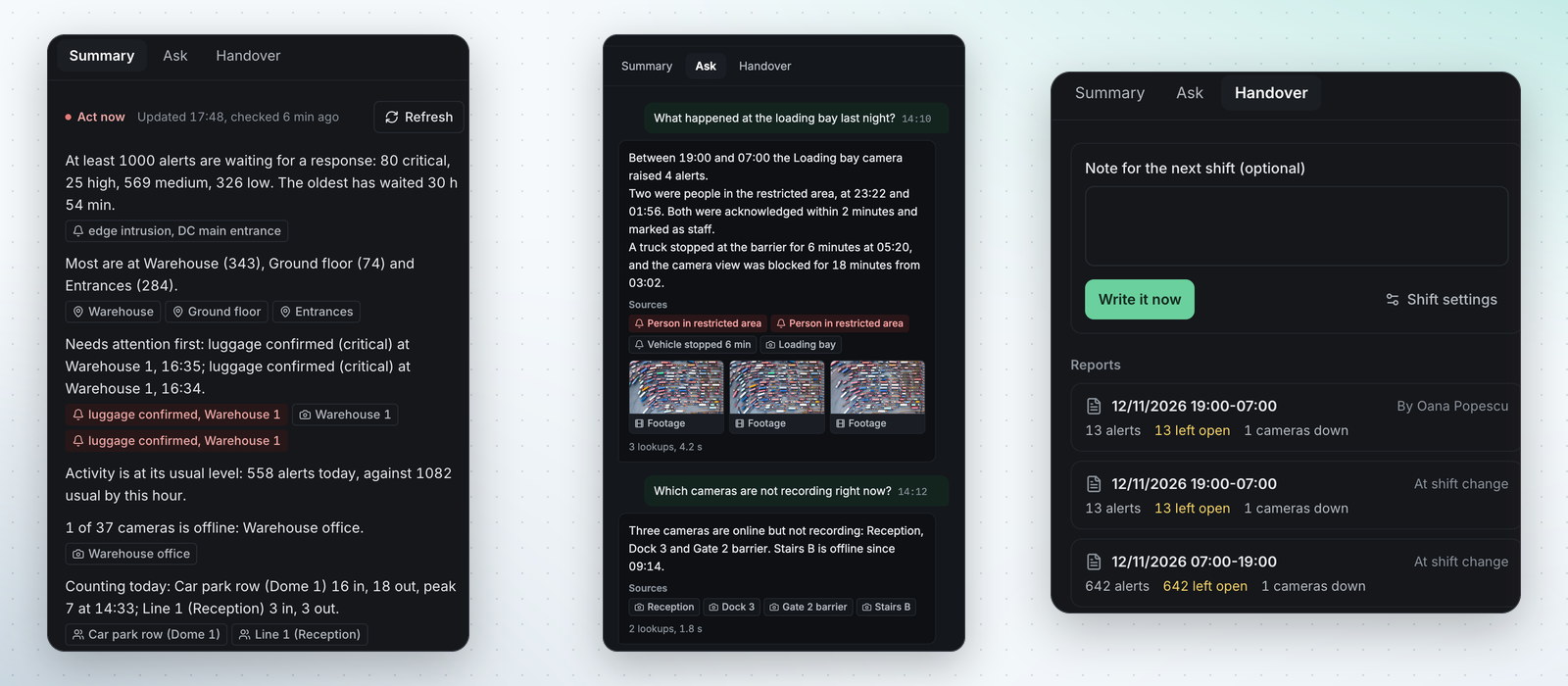
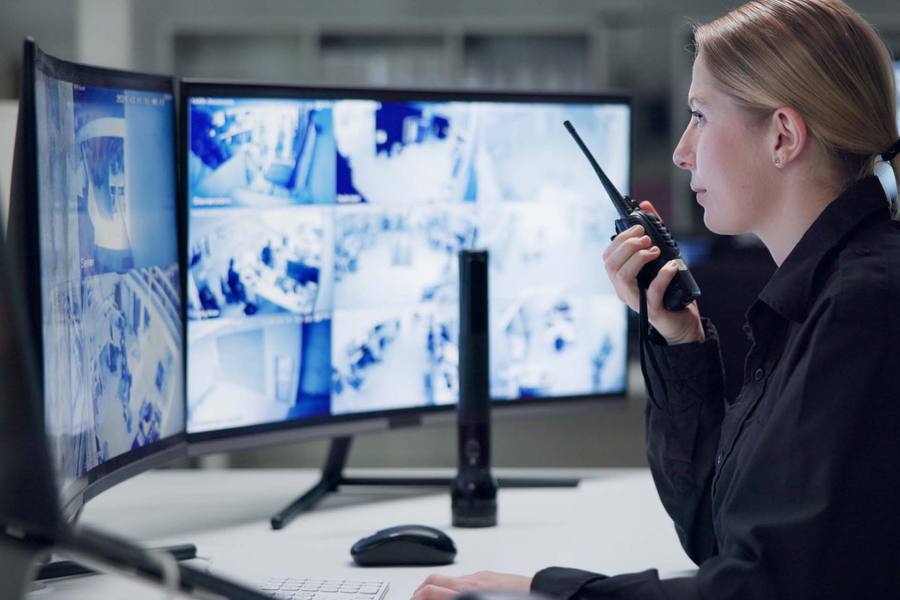
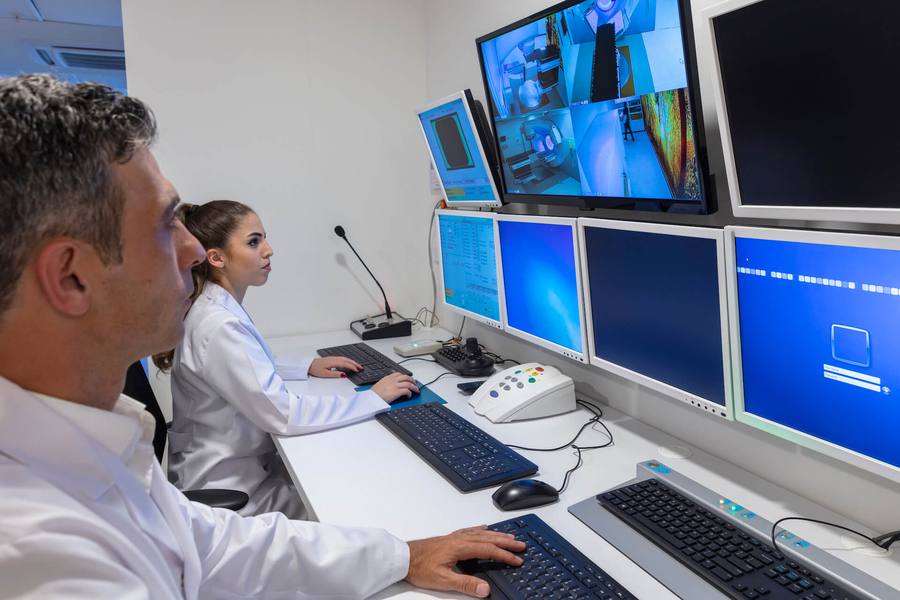
The desk works from one dashboard: the live cameras of the moment, the alerts that need a response, the map with every device and its state. The assistant keeps a situation summary up to date and answers questions in plain language, with its sources, when a language model is connected.
At each of the three shift changes the platform writes the handover: what happened, what is still open, which cameras went down, with a note for the next shift, sent by email as a PDF. The weekly report with the occupancy of the waiting rooms and the alerts per building goes to the head of security and the facility manager.
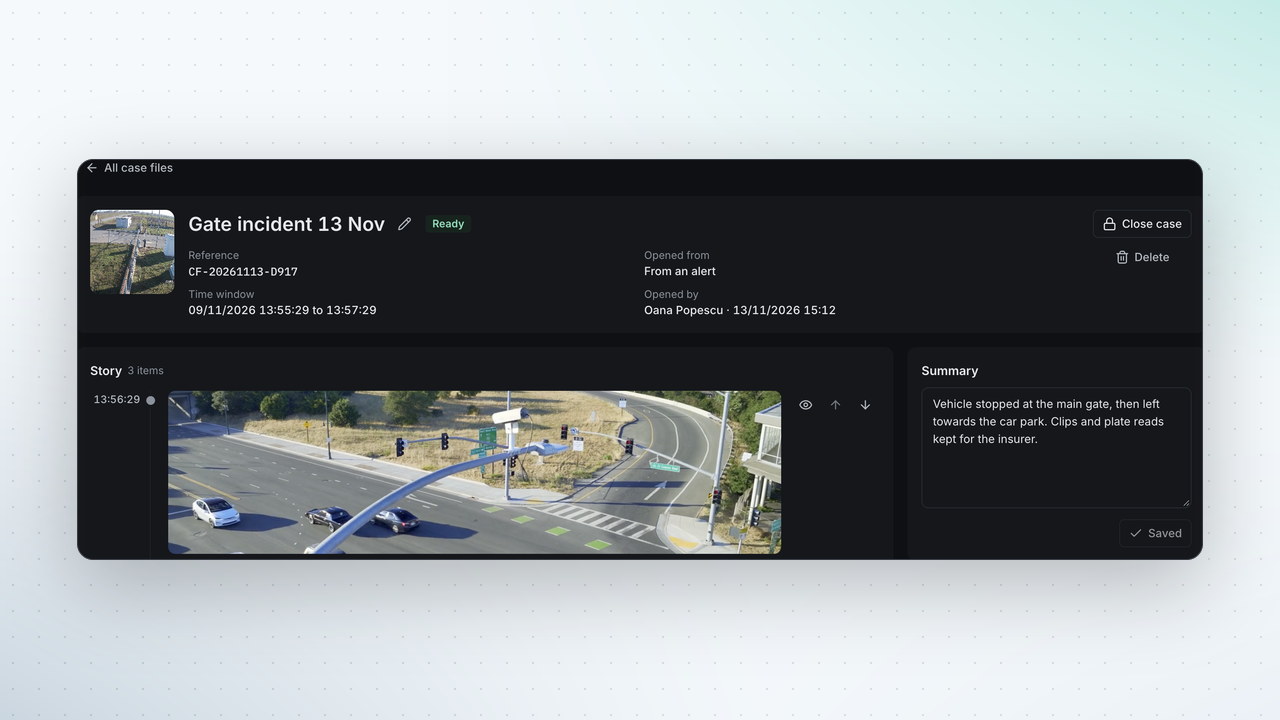
Incidents and complaints
A complaint, a fall or a theft becomes a case file: the alert with its picture, the clips around it from the cameras that saw it, the sensor event, the plate at the barrier, the notes of the person who handled it, in time order. The person or vehicle involved can be followed across the cameras, with a clip around each sighting.
The case leaves as one signed package, with the reason for the export recorded; the police, the insurer or the hospital's committee can verify it without access to the platform. Every view and export is in the audit trail.
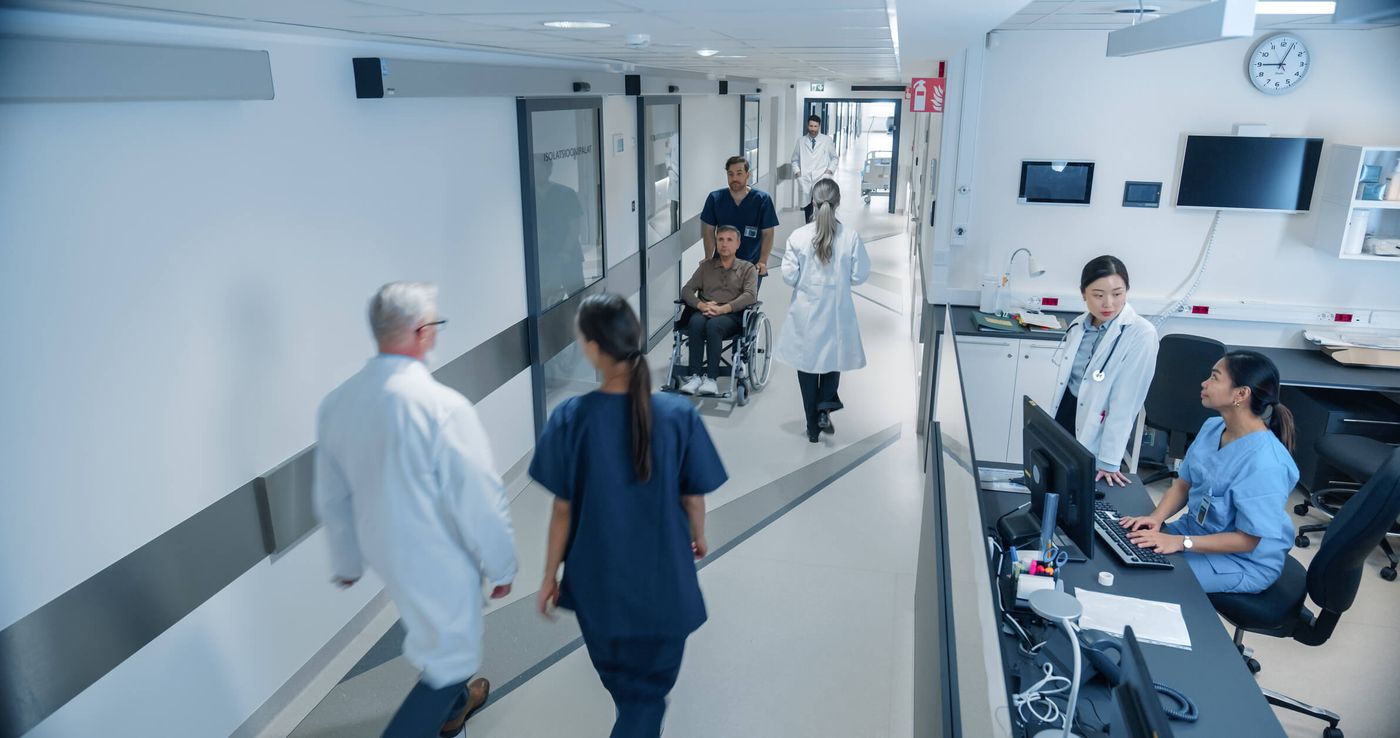
Detection, not identification
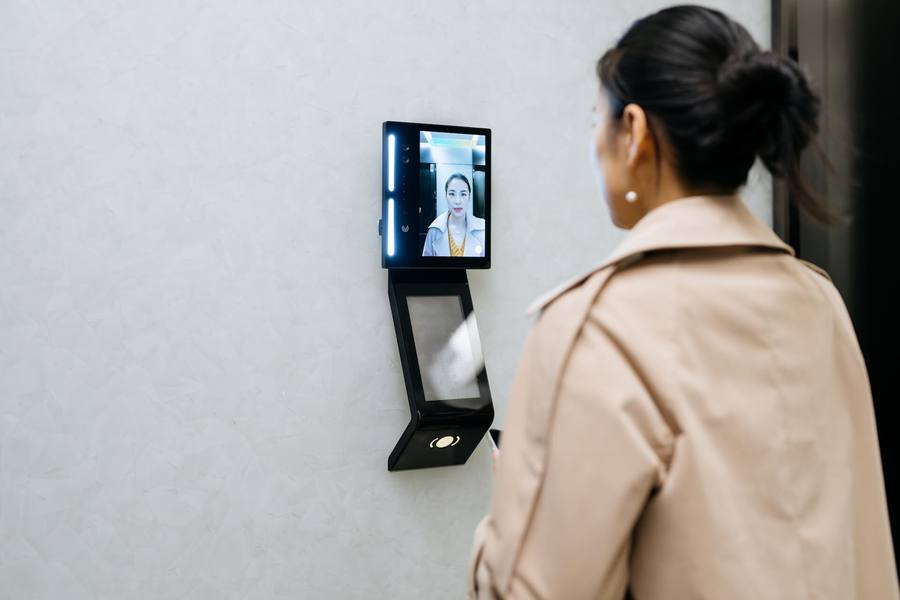
The platform detects people, vehicles and events; it does not identify anyone by face. Counts and heatmaps are totals, recordings are opened only by the roles allowed to, and each view is written to the audit trail kept for two years.
Security sees the live cameras and the inbox, the facility manager the reports, the data protection officer the audit trail, and each person only the cameras assigned. Retention is set per camera and checked against the policy, and footage stays on a server the hospital owns or in an isolated tenant hosted by Sentra.
Healthcare use cases

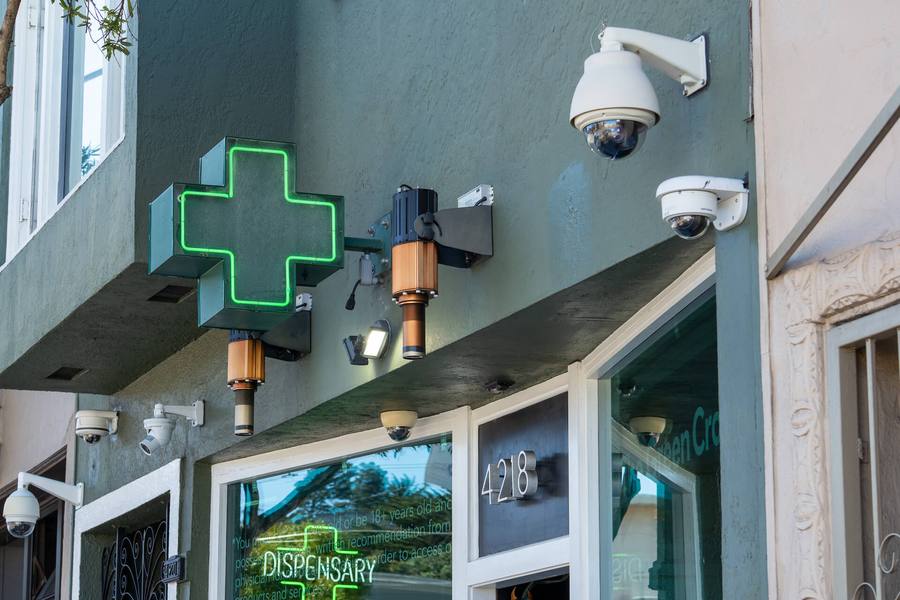
Deployment options
Sentra runs on a server you own, inside the hospital, or hosted by Sentra. The pages, the rules and the retention are the same in both cases.
Capabilities on this page: Map, Zones and Rules, Counting, Heatmaps, Access Control, Parking and Junctions, Sensors, AI Detection and Alerts, Coverage Planning, Assistant and Shift Handover, Investigations, Reports and Audit.
See it on your own cameras
A demo can run on your cameras or on a Sentra demo site, self hosted or hosted by Sentra. Tell us which events and figures you need, and we prepare it.