

Logistics
Sentra gives a distribution center one picture of its gate, its yard and its warehouse, on the cameras and recorders it already owns. Trucks read at the gate and matched to the expected list, loading bays on a live board, forklifts and people in the aisles, the fence line at night and the handover between shifts, in one console for the guard post and the depot manager. Several depots sit in one organization, and footage stays on a server the company owns or in an isolated tenant hosted by Sentra in Romania.
Each arrival recorded with a photo and checked against a watchlist
Occupied and free bays per row, live, from the yard camera.
Fences and loading doors drawn on the camera picture, with a snapshot and a clip per alert.
A vehicle by color and plate or a person by description, across the site.
A day at the depot
The same cameras, sensors and rules from the first shift to the night. All use cases
- 06:00Gate
The first trucks arrive. Plates on the expected list open the barrier, the rest wait for the guard, and every passage is logged with a picture.
Access Control - 09:30Loading bays
The yard board shows which bays are taken, which are free and how long each truck has been on its bay.
Parking and Junctions - 12:00Warehouse
A person on the ground in an aisle raises a critical alert that the shift leader has to acknowledge.
AI Detection and Alerts - 16:45Investigation
A damaged consignment: the trailer is followed across the yard cameras and the case file leaves as a signed package for the insurer.
Investigations - 23:15Fence line
An alarm line on the fence is crossed. The clip reaches the guard on the phone, and the handover report lists it for the morning shift.
Zones and Rules
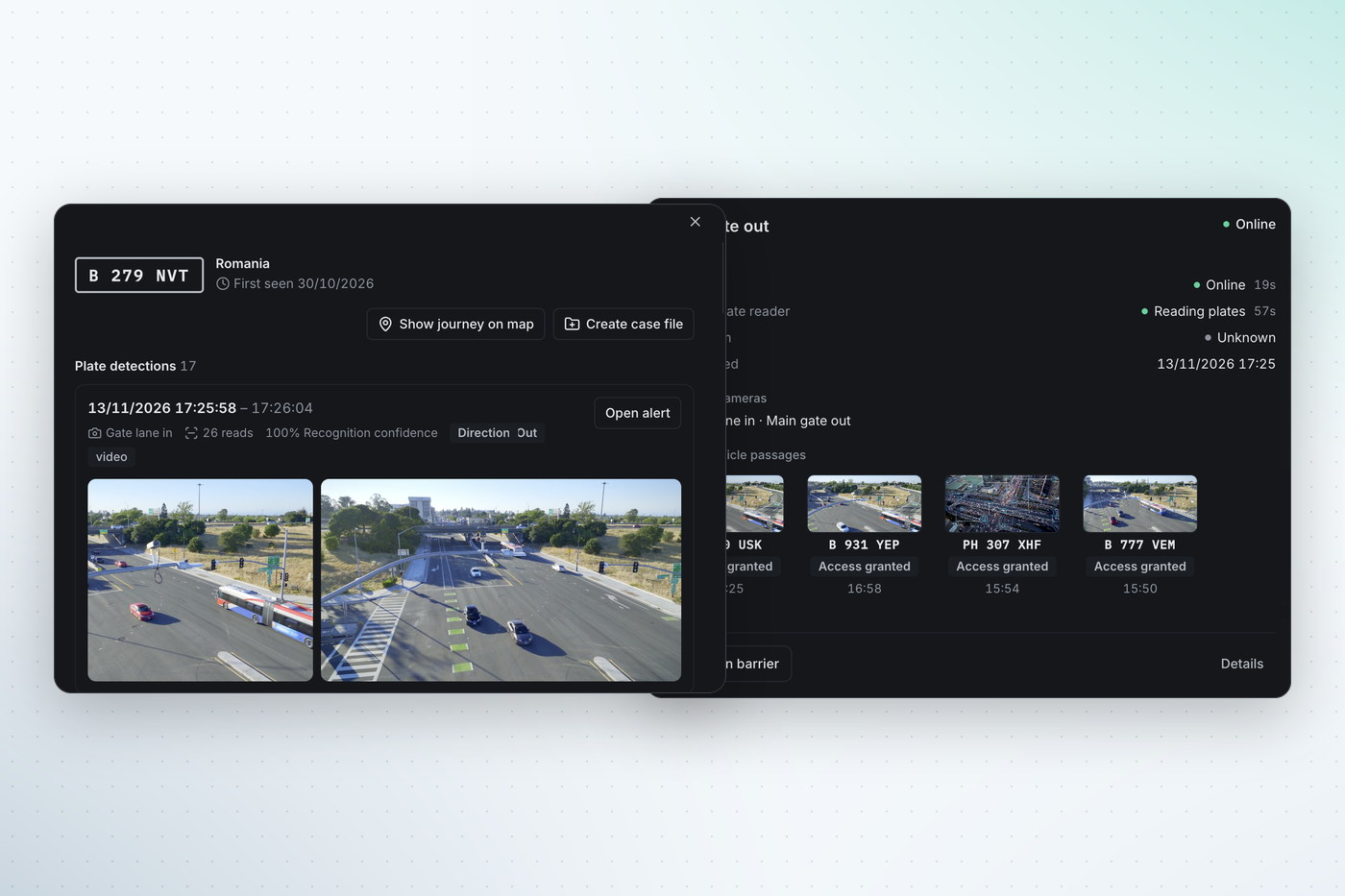
The gate: plates, the barrier and the expected trucks
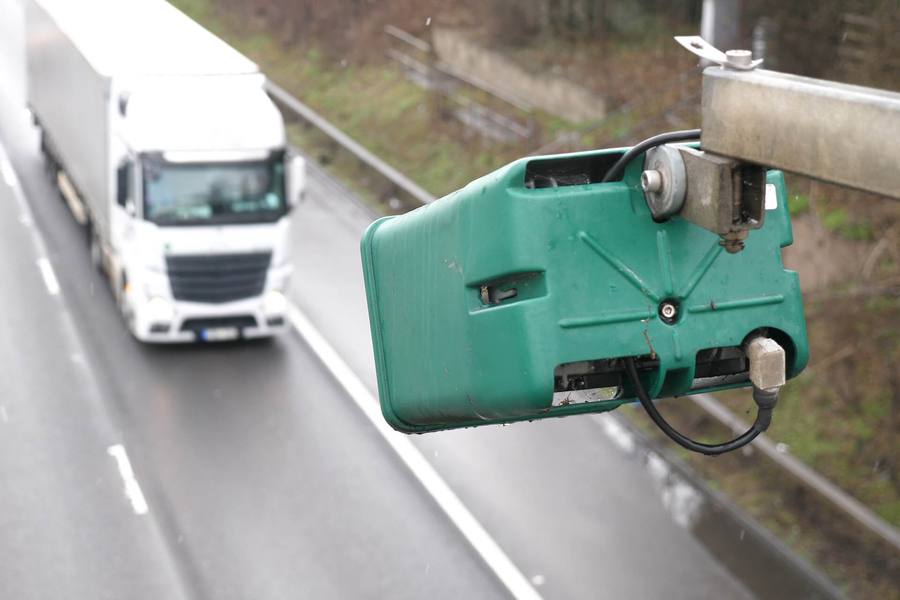
The gate camera reads every plate and shows the arrival with a picture. A truck on the expected list opens the barrier without a call to the office, a plate on the blocked list raises an alert for the guard, and everything else waits for a decision. Each passage is logged with its picture, and the guard keeps a manual open.
A plate read at the gate can be followed across the yard cameras, so the office knows which bay a truck went to, how long it stayed and when it left.
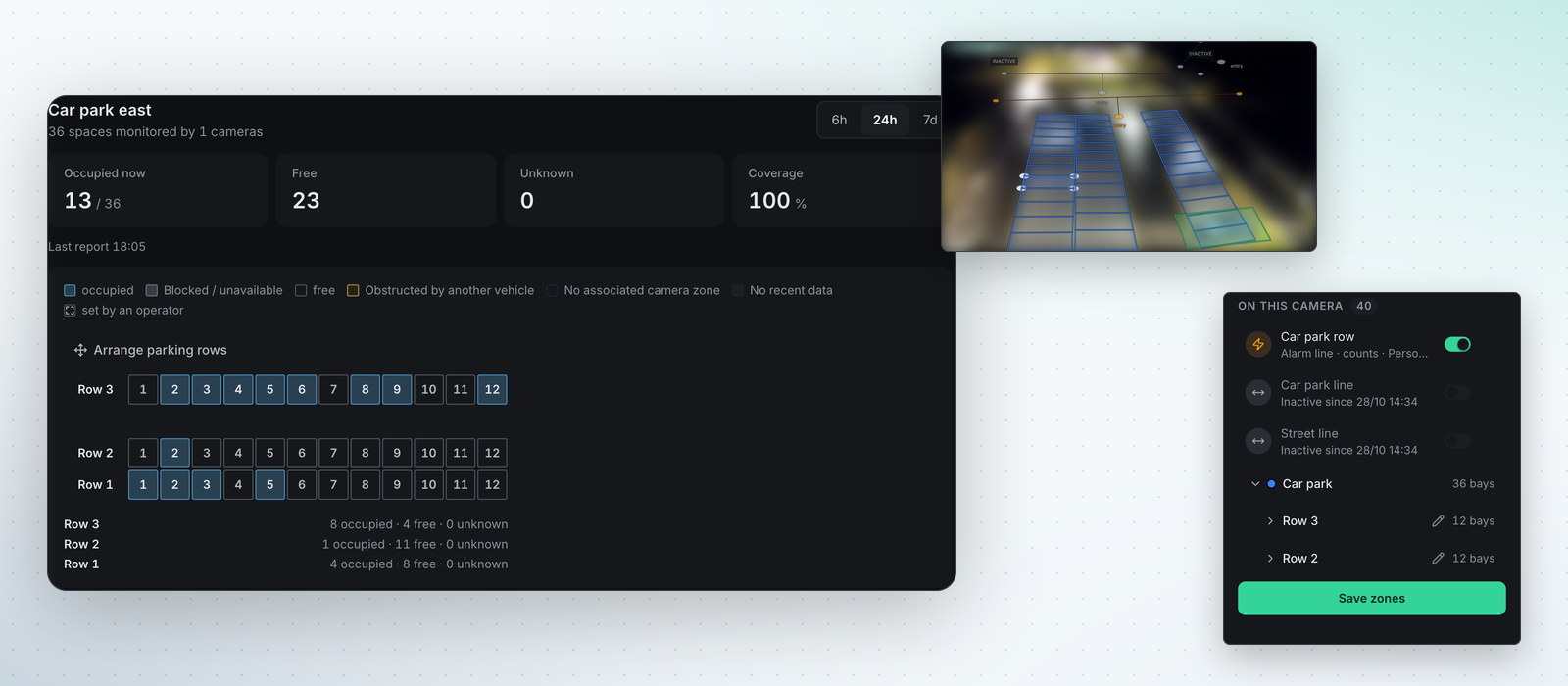
Loading bays on the yard board
Bays drawn on the yard camera give a live board: which loading positions are taken, which are free, which row is full and how long each truck has been on its bay. The dispatcher sees it without walking the yard.
- Occupied, free and unknown per row, with the time of the last report
- A stopped vehicle zone on the lane raises an alert when a truck blocks the circulation
- The board runs on a screen at the gate or in the dispatch office
Vehicles in and out, and where the queues form
A counting line on the gate lane gives vehicles in and out per hour and per class, trucks apart from vans and cars, with a picture of each crossing. The figures show the peaks of the day and feed the slot plan for the carriers.
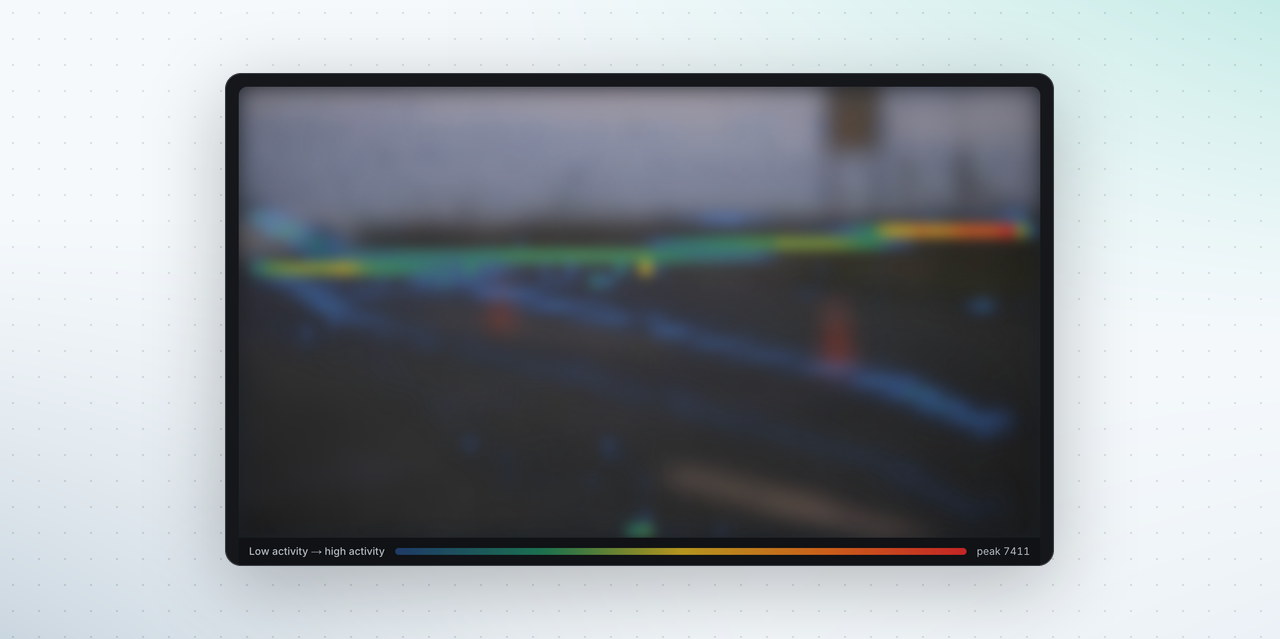
The vehicle heatmap over the yard camera shows where trucks queue and where they wait, by day, week or month, so the layout of the yard and the opening hours of the gate rest on figures rather than on complaints.
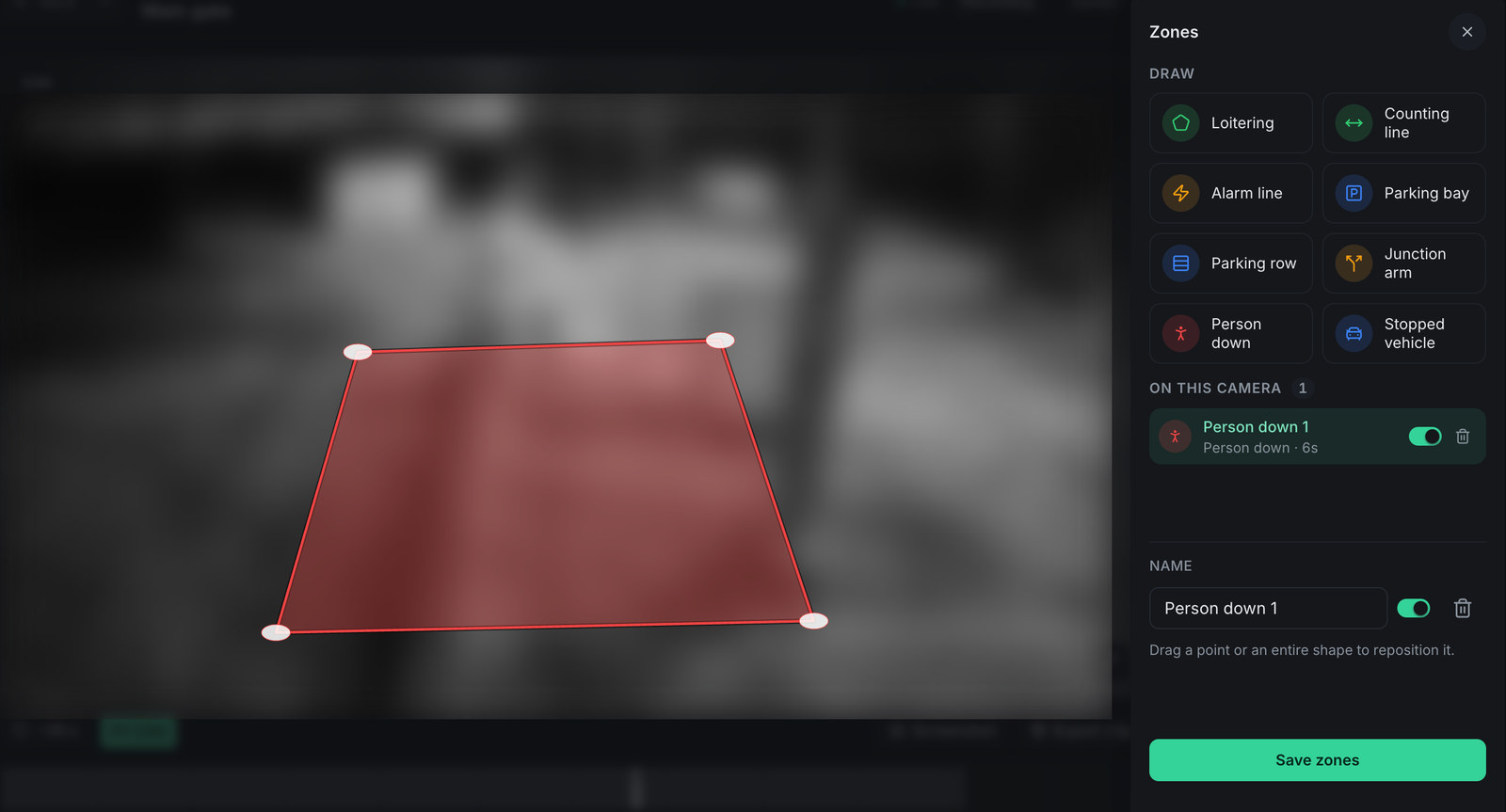
Forklifts and people inside the warehouse
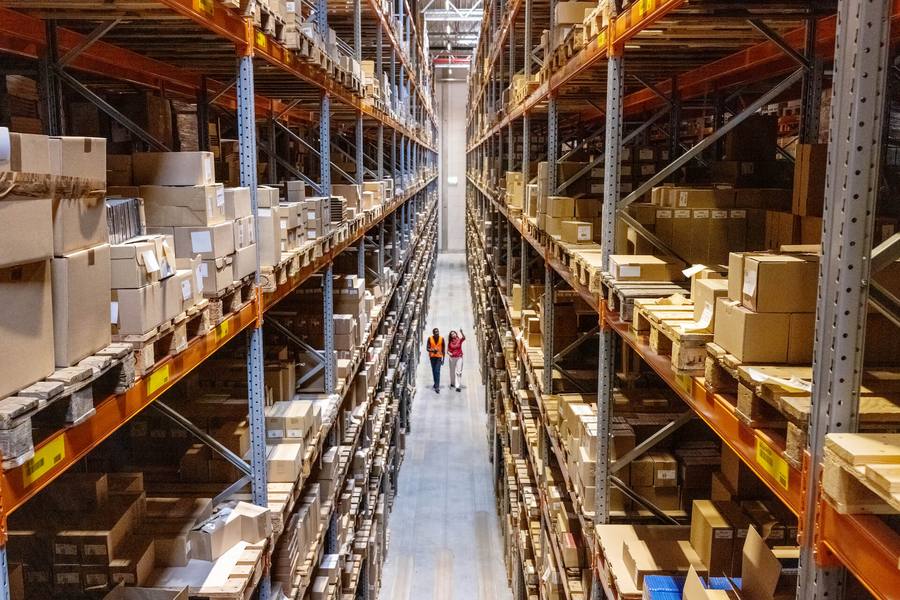
A person down zone over the aisles and the ramps raises a critical alert when someone is on the ground, with the picture and the clip, and the shift leader has to acknowledge it. Loitering zones cover the cages with high value stock, and an alarm line on a door meant for vehicles raises an alert when a person walks through it.
The warehouse sits on its floor plan, imported from the architect's drawing, with each camera and its field of view, so the operator opens the right camera from the aisle on the plan, not from a list.
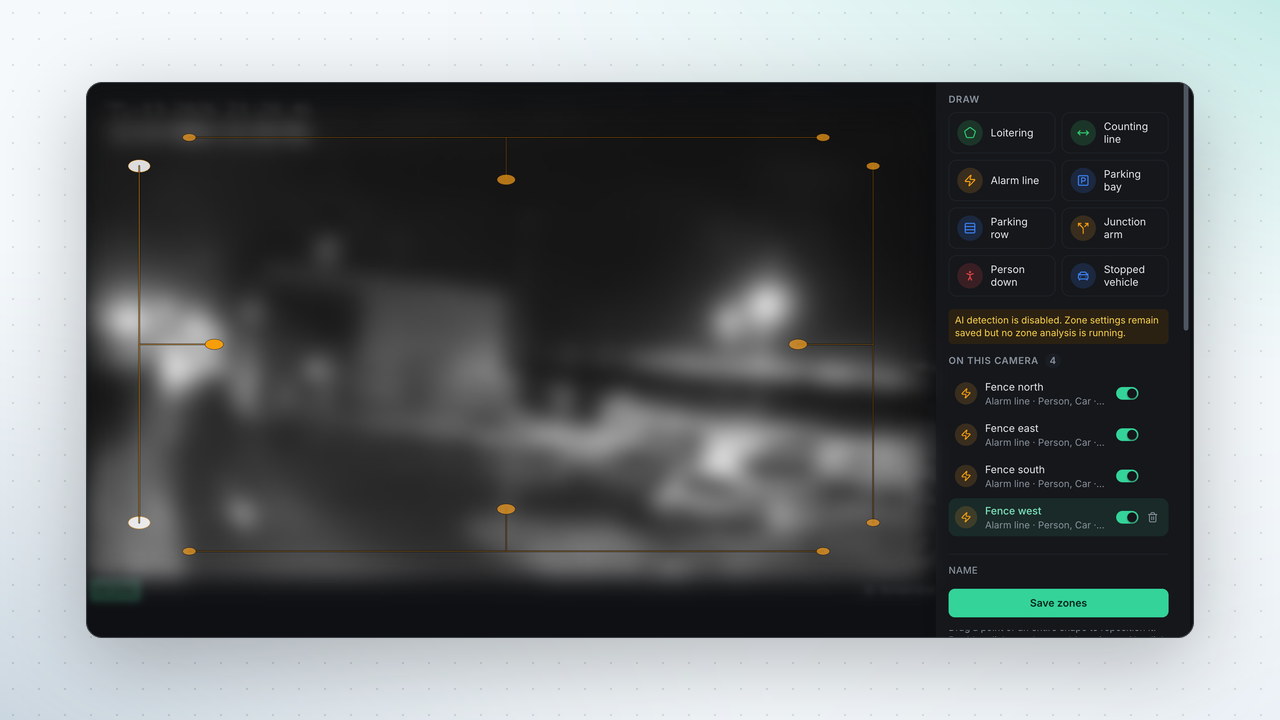
The fence line and the loading doors after hours
Alarm lines along the fence and across the loading doors raise an alert when they are crossed after closing, with a snapshot and a clip, and the alert reaches the guard on the phone. The direction matters: a line can fire on the way in and stay quiet on the way out.
Each alert has a category and a severity set for the company, so a crossing at the fence at night is critical and pops up with a sound, while a vehicle at the gate during the day is a line in the log.
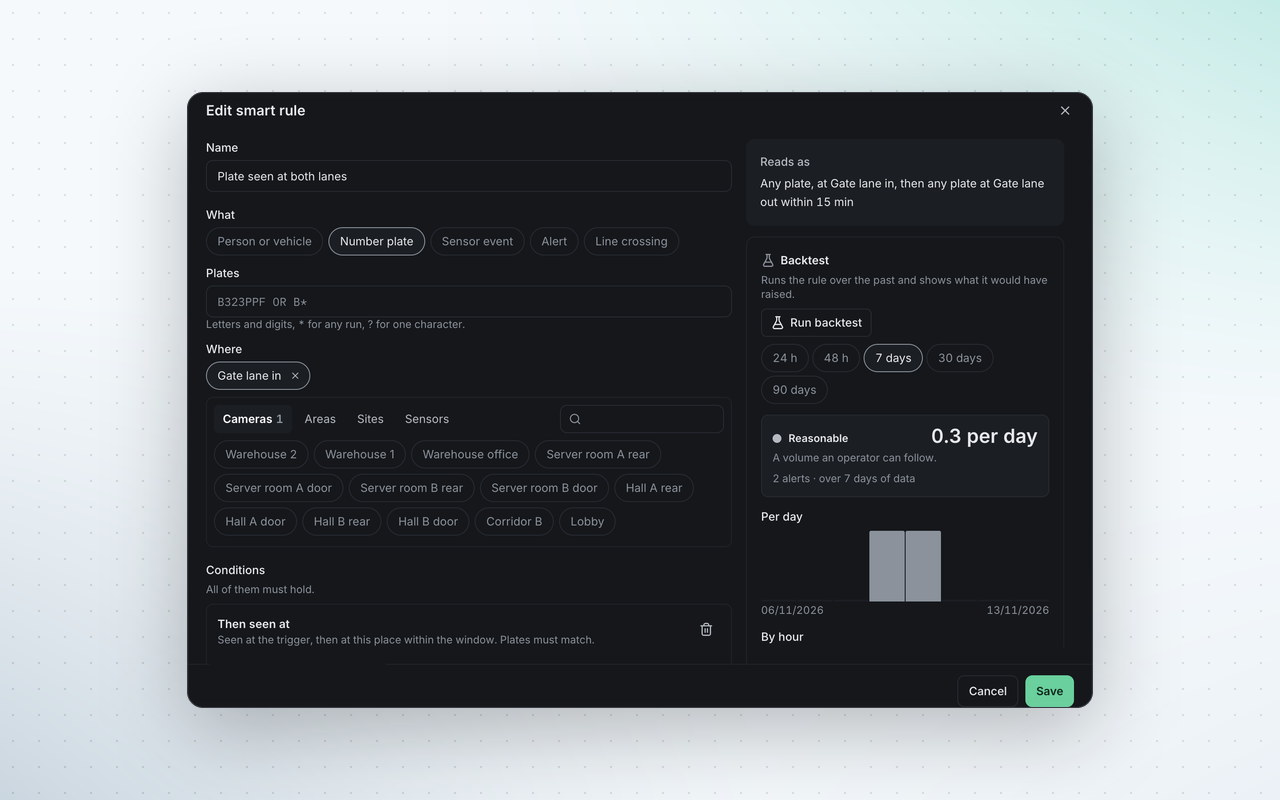
Rules written for the depot, tested on history
Smart rules tie the pieces together: the same plate read at two depots within the hour, a person over the fence line followed by an alarm on a loading door, a sensor in the chemical store that reports smoke while nobody has gone through its door.
Every rule is run over the last weeks before it is switched on, with the alerts it would have raised and the examples, so the guard post gets a handful of alerts that matter and not a flood.
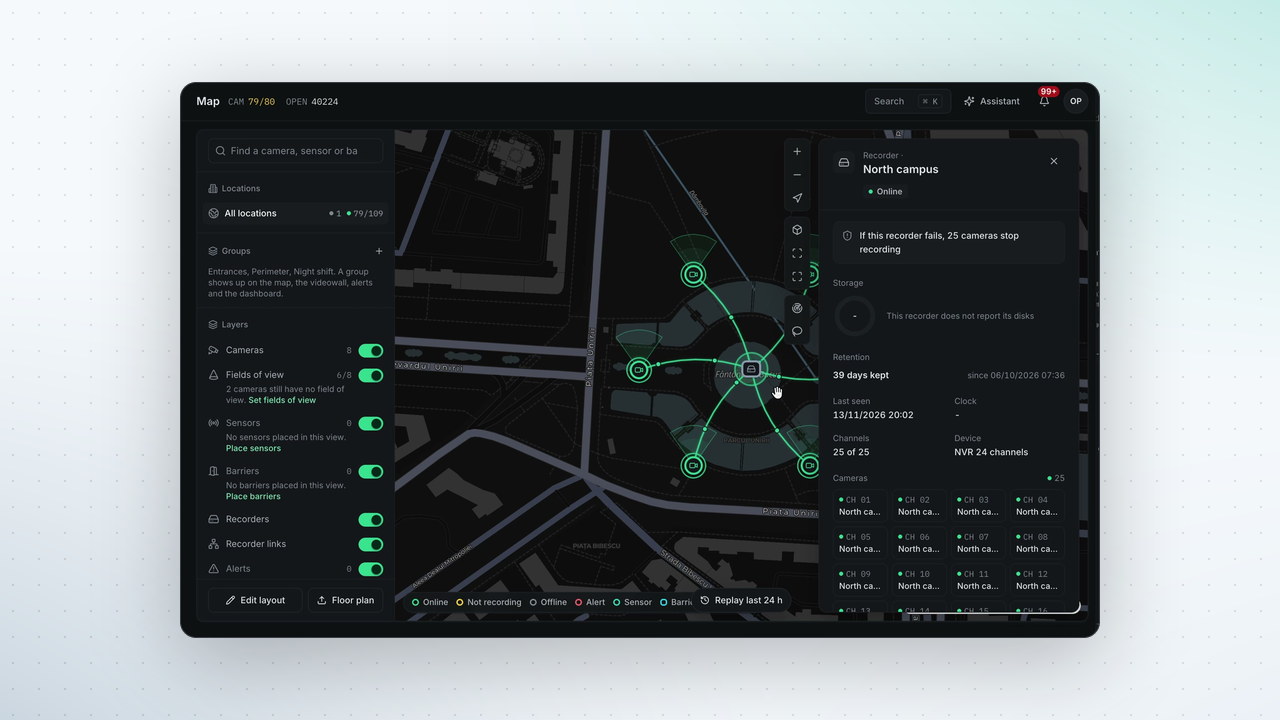
Several depots in one console, with the recorders they already own
Each depot keeps its recorder: Sentra connects to it and shows its channels, its disks and its retention next to the cameras it analyzes, on a map with every device and its state. A camera that goes dark or a recorder that fills up is seen the same day, not at the next incident.
- Head office sets modules, retention and alert rules once; each depot manages its own cameras and people
- Roles per desk: guard, dispatcher, depot manager, auditor, each limited to its cameras
- Every view and every export is written to the audit trail
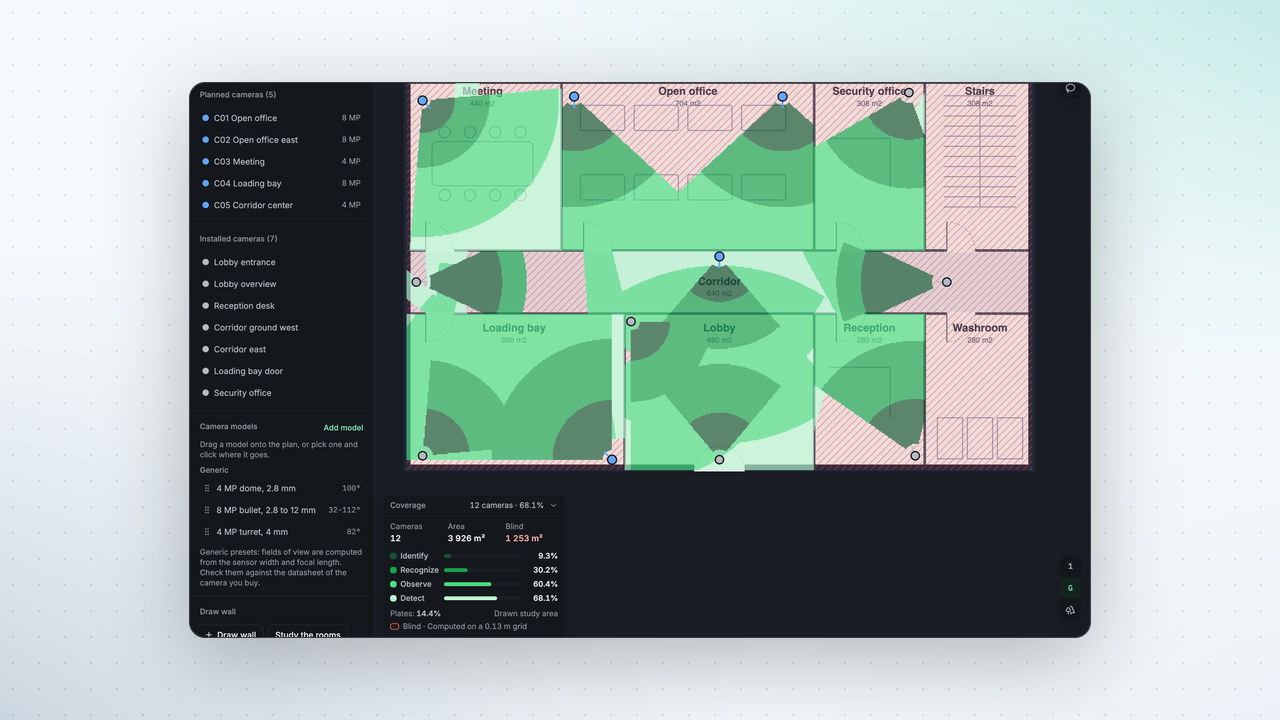
A new hall planned before the cameras are bought
Coverage planning puts the cameras on the drawing of the new hall or the yard extension before anything is ordered. Each camera model shows where it detects a person, where it observes, where it recognizes and where it identifies, and the blind spots between the racks stand out.
The study prints for the tender and the installer, and once the cameras are in, the planned and the installed coverage sit side by side on the same drawing.
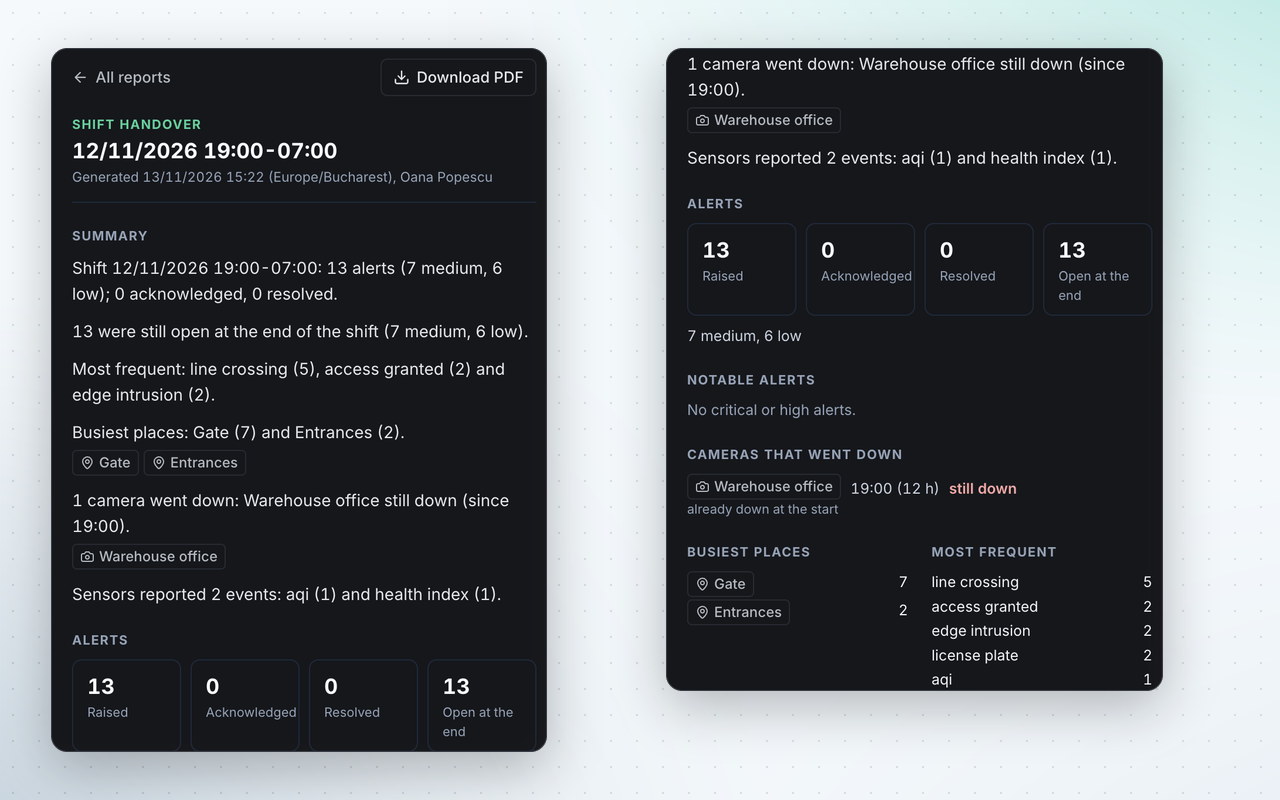
The night shift handover and the weekly figures
At each shift change the platform writes the handover: the alerts of the shift, what is still open, the cameras that went down, the busiest places, with a note for the next shift, emailed as a PDF. The assistant gives the same picture at any moment as a situation summary.
The depot manager gets the weekly figures by email on a schedule: vehicles in and out, bay occupancy and alerts by category, per depot.
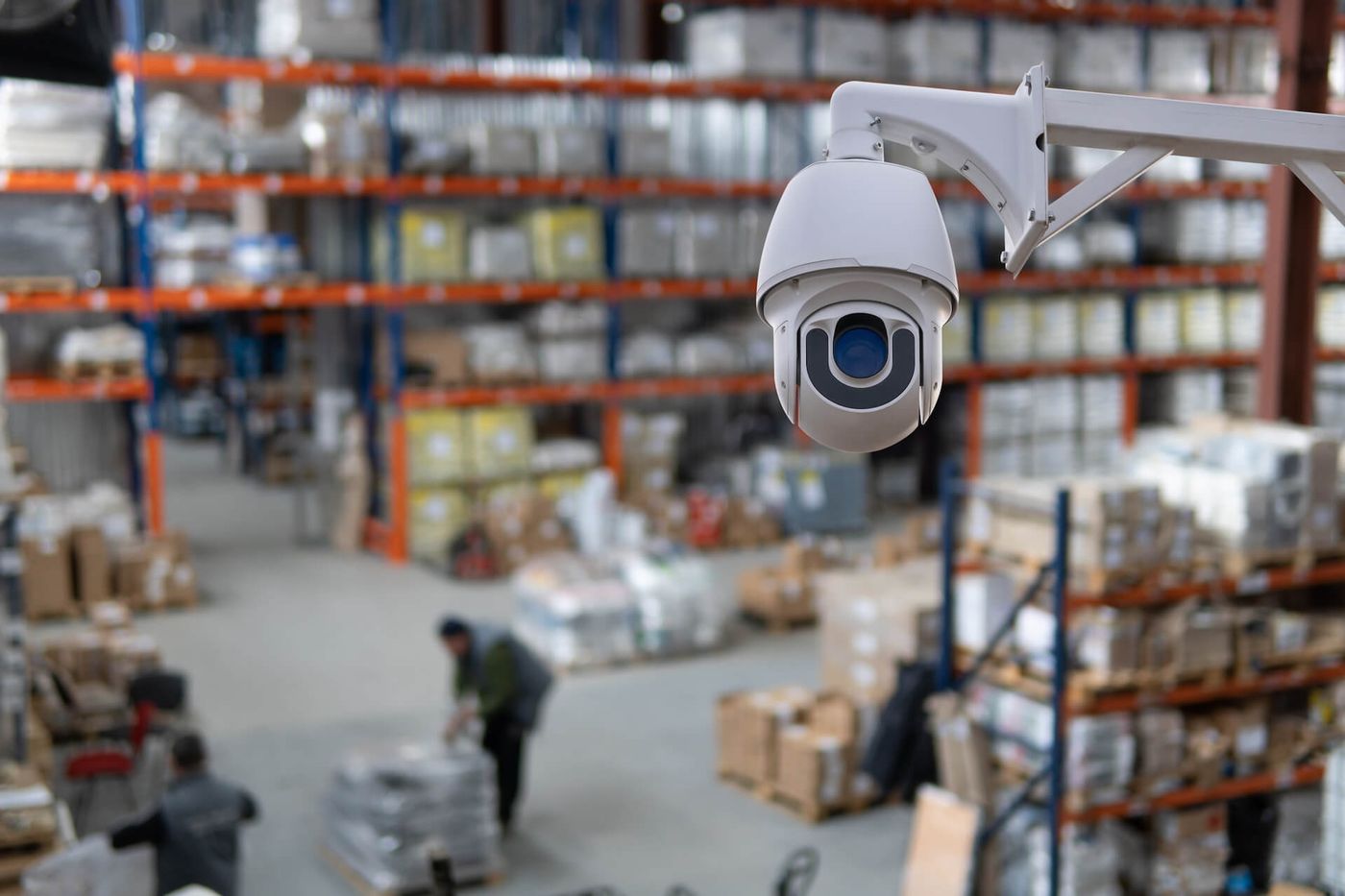
Incident investigation
A damaged consignment, a missing pallet, a scratch on a trailer: the vehicle or the person is followed across the cameras of the yard and the warehouse, with a clip around each sighting, and the case file puts the plate reads, the gate passages and the clips in time order with a summary.
The case leaves as a signed package that the insurer or the police verify outside the platform, with the reason for the export recorded.
Logistics and industrial use cases

Deployment options
Sentra runs on a server you own or hosted by Sentra. The pages, the rules and the retention are the same in both cases.
Capabilities on this page: Access Control, Parking and Junctions, Counting, Heatmaps, AI Detection and Alerts, Zones and Rules, Sensors, Map, Coverage Planning, Assistant and Shift Handover, Investigations, Reports and Audit.
See it on your own cameras
A demo can run on your cameras or on a Sentra demo site, self hosted or hosted by Sentra. Tell us which events and figures you need, and we prepare it.